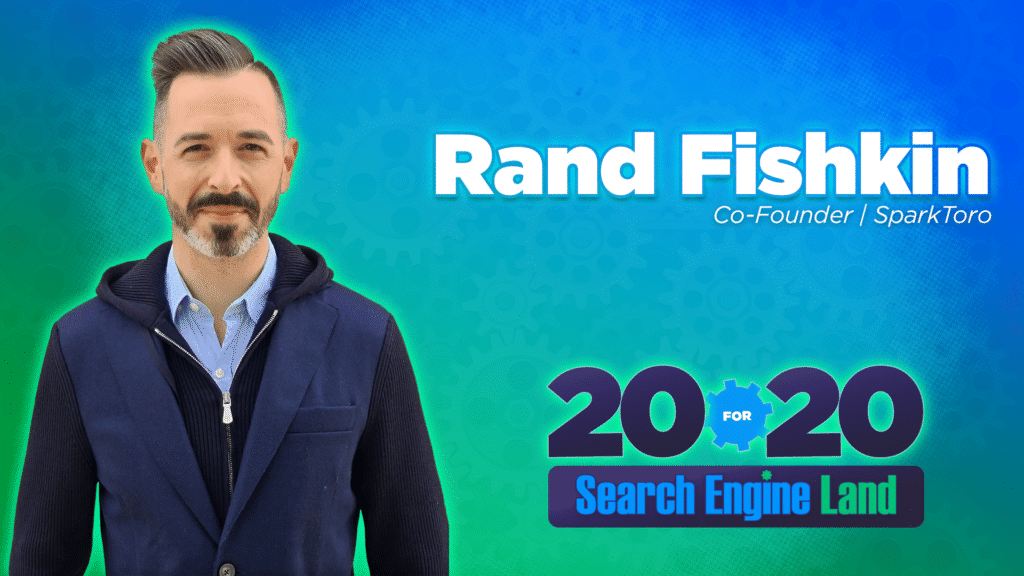

Rand Fishkin didn’t get into SEO because he saw the future.
He got into it because he had no choice.
In the early 2000s, Fishkin helped run a small web business with his mom in Seattle. They hired another company to do SEO until they couldn’t afford to pay them anymore.
That moment pushed him into search marketing. More than 20 years later, Fishkin has become one of the best-known voices in SEO — and one of Google’s biggest critics.
In this interview, he looks back at how search has changed, what went wrong, and what may happen next.
Early SEO was wild
SEO today can feel messy. But in the early days, it was even more chaotic.
“There was no social media,” is how Fishkin described that era, where forums like WebmasterWorld and Search Engine Watch were the center of the industry.
People shared tactics openly. Many of those tactics were risky. Buying links was common — and effective.
Fishkin did it, too. Then Google’s Matt Cutts called him out in public.
That moment changed how he approached SEO. He spent years focusing on “white hat” practices and following Google’s guidelines.
Looking back, though, Fishkin now questions whether that shift went too far. He believes Google’s own behavior over time has made those guidelines harder to trust.
The early industry wasn’t just chaotic — it was also full of strange and memorable moments. Fishkin recalled massive conference parties with huge budgets and over-the-top ideas, including a staged “retirement” of the Ask Jeeves mascot.
But what stood out most to him wasn’t the tactics or the parties.
“My favorite thing… is people,” he said, pointing to the relationships and friendships built over decades in search.
When Google stopped sending traffic
Many people think AI is the big turning point in search.
Fishkin says the shift started much earlier — around 2011.
That’s when the idea of “zero-click search” first appeared. Google began answering more queries directly on the results page instead of sending users to websites.
At first, it was small features like weather boxes and calculators.
Then it grew:
- Around 2016–2017: nearly half of searches ended without a click
- By 2018: more than half
- Today: more than two-thirds
Fishkin emphasized that this trend didn’t start with AI — it has been building for more than a decade.
Publishers had a chance — and missed it
Fishkin believes publishers could have taken action early — but didn’t.
- “The time to fight back… was 15 or 20 years ago,” he said.
In his view, large media companies should have worked together to push back against Google’s growing control. They could have demanded payment for content or limited how Google used it.
Instead, they allowed Google to crawl and use their content freely.
At the same time, Google expanded its influence…
Source link
Disclaimer
We strive to uphold the highest ethical standards in all of our reporting and coverage. We blogs.grocliq.com want to be transparent with our readers about any potential conflicts of interest that may arise in our work. It’s possible that some of the investors we feature may have connections to other businesses, including competitors or companies we write about. However, we want to assure our readers that this will not have any impact on the integrity or impartiality of our reporting. We are committed to delivering accurate, unbiased news and information to our audience, and we will continue to uphold our ethics and principles in all of our work. Thank you for your trust and support.
Website Upgradation is going on for any glitch kindly connect at [email protected]