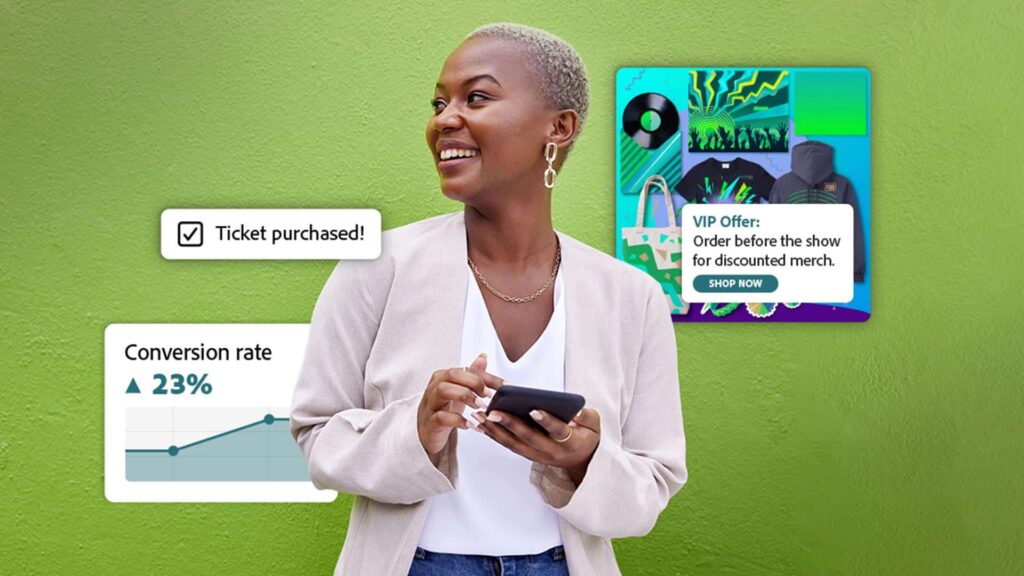


Think about the last time you binged those true crime documentaries. The next time you opened your streaming app, the homepage likely shifted. Investigative series rose to the top. Maybe a notification alerted you when a new series dropped. Promotional emails highlighted only what you hadn’t watched. You didn’t see the data parsing or the decisioning behind it. You just looked forward to enjoying the next title.
That’s the standard. According to the Adobe 2025 AI and digital trends report , 71% of consumers want personalized — or personally relevant — offers and information, and 78% expect seamless experiences across channels. Yet fewer than half of brands consistently deliver.
The issue is structural. When customer data lives in disconnected systems, teams will struggle to align insight, timing, and execution quickly enough to take meaningful action. AI can’t magic the problem away. According to the Adobe 2026 AI and digital trends report, fewer than half of organizations say their data foundation is adequate to support AI at scale.
At the initial stages of the modernization journey, the path to personalization can feel daunting. But progress will be easier than you think when you introduce a foundation for a unified customer experience.
The real barrier to personalization: Disconnected journeys
Most brands have plenty of data. It’s cohesion they lack. Your marketing team likely runs email, web, mobile, paid media, support, and even in-person channels. Each collects important signals, but are they sharing context across channels fast enough to shape the next interaction?
If not, impact is immediate. A customer browses a product online, then receives an email with a different price. Or a subscriber contacts support and has to repeat their story to multiple team members before getting help. Or a loyal customer happily purchases your product—only to see the same ads promoting it in their feed for weeks after.
Even minor bumps along the customer journey chip away at trust. Nearly half of customers say they disengage when promotions feel irrelevant or mistimed.
Delivering a unified customer experience requires continuously updating your understanding of each customer and then immediately sharing that insight across every department and touchpoint.
This can require substantial change. But taking the following steps makes the path ahead more straightforward:
Step 1: Build a unified customer profile
A unified experience starts with a single, living view of the customer.
Instead of keeping separate records for each channel, create a dynamic profile that reflects behavior, preferences, and history across all departments as customer activity happens in real time. Every click, purchase, service interaction, and loyalty update should feed into the same source of truth.
With that information, customer segmentation becomes smarter and messaging becomes more relevant. Customers stop receiving…
Source link
Disclaimer
We strive to uphold the highest ethical standards in all of our reporting and coverage. We blogs.grocliq.com want to be transparent with our readers about any potential conflicts of interest that may arise in our work. It’s possible that some of the investors we feature may have connections to other businesses, including competitors or companies we write about. However, we want to assure our readers that this will not have any impact on the integrity or impartiality of our reporting. We are committed to delivering accurate, unbiased news and information to our audience, and we will continue to uphold our ethics and principles in all of our work. Thank you for your trust and support.
Website Upgradation is going on for any glitch kindly connect at [email protected]