
AI has become part of nearly every industry, integrated into apps, company processes, and everyday life. As someone who’s been doing local SEO since it became a thing, I’m seeing a major shift in how people search and the answers they get.
In the good old days, the average local business could rank well by optimizing its website, optimizing its Google Business Profile, building about 50 citations, and asking for reviews. In an AI search world, those activities are table stakes.
To perform well in AI-powered local search, you also need to shape what the broader web says about your business, or, in other words, how well-known your brand is.
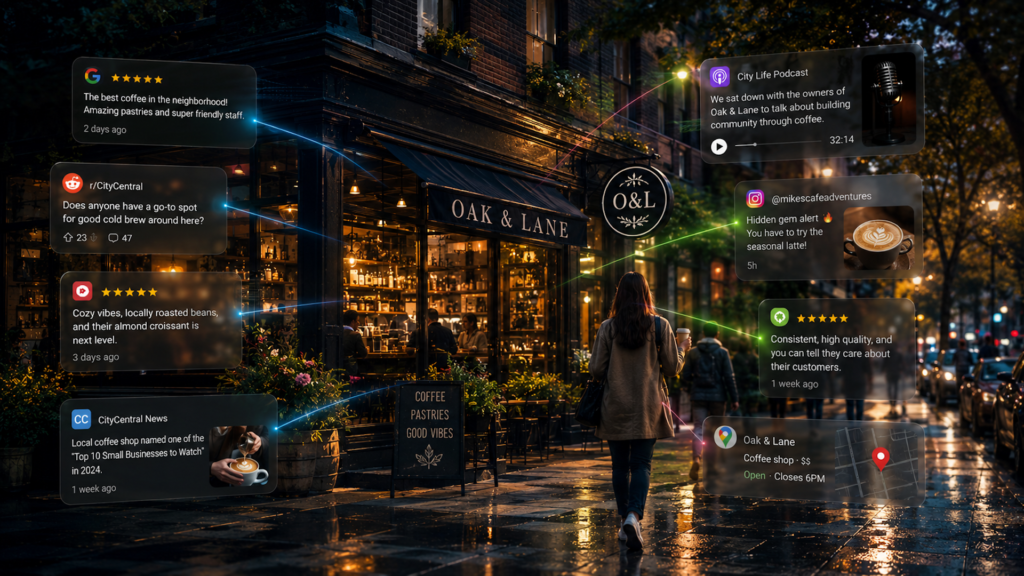
Think of local search as a digital “word-of-mouth” system.
- What are people saying about your brand?
- Are you mentioned in publications, blogs, or industry sites?
- Do people talk about you on social media?
- What sentiment exists around your business beyond your website and GBP?
These are the questions AI systems ask when users request local business recommendations. Here’s how to shape the reputation signals AI search engines rely on.
How to do competitor research for AI visibility
One of the first steps in an AI search strategy is identifying which brands LLMs recommend most often and finding out what they’re doing.
Identify which businesses get mentioned most in AI responses
AI responses change constantly, so you need to run the same query multiple times to study patterns.
Run your most common brand searches at least 20 times in your preferred LLM. You can do this manually or use software like Gumshoe or Waikay. These tools run synthetic prompts based on your business details and show how often you appear.


Identify the sites that AI most often cites
After identifying your competitors, look at the sources LLMs use. You can dig through the results manually or use one of the tools mentioned above.
Get your brand mentioned on those sites
Once you have that list of sites, try to get your brand mentioned on them.
If AI systems cite blogs, offer to contribute expert content. If they mention podcasts or YouTube channels, ask to be a guest. The goal is to amplify your brand.
Your customers search everywhere. Make sure your brand shows up.
The SEO toolkit you know, plus the AI visibility data you need.
Start Free Trial
Get started with

How to build reviews for AI
Since Google has been the primary discovery channel for the past decade, most businesses have focused only on getting reviews on Google. To perform well in AI results, you also need reviews on other sites.
Diversify your review strategy
Ask for reviews on a wide range of sites: Yelp, BBB, Facebook, and other review sites prominent in your industry. Frequent reviews across diverse platforms increase your brand’s visibility and can also help rankings in traditional…
Source link
Disclaimer
We strive to uphold the highest ethical standards in all of our reporting and coverage. We blogs.grocliq.com want to be transparent with our readers about any potential conflicts of interest that may arise in our work. It’s possible that some of the investors we feature may have connections to other businesses, including competitors or companies we write about. However, we want to assure our readers that this will not have any impact on the integrity or impartiality of our reporting. We are committed to delivering accurate, unbiased news and information to our audience, and we will continue to uphold our ethics and principles in all of our work. Thank you for your trust and support.
Website Upgradation is going on for any glitch kindly connect at [email protected]