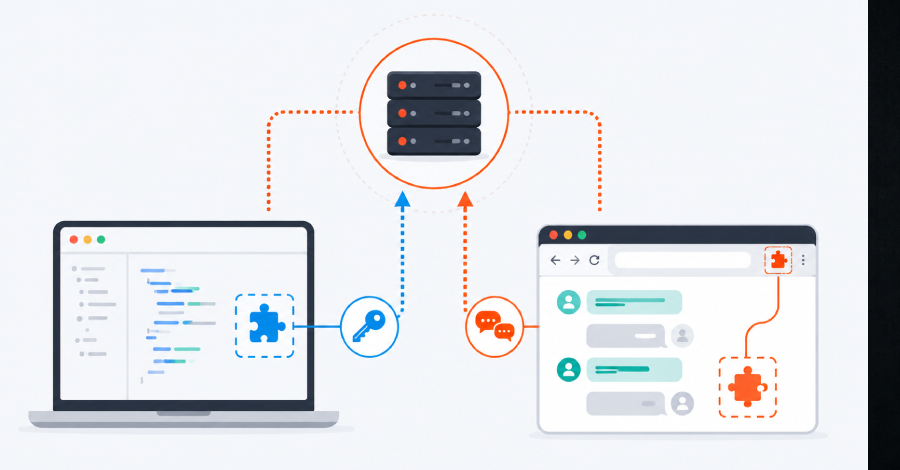


Cybersecurity researchers have flagged a “coordinated malware campaign” on the JetBrains Marketplace that has published no less than 15 malicious plugins capable of exfiltrating artificial intelligence (AI) provider keys.
“Every plugin poses as an AI coding assistant built on DeepSeek and other large language models, offering chat, commit messages, code review, bug finding, and unit tests,” Aikido Security researcher Ilyas Makari said. “They function exactly as advertised. However, the AI provider API key you enter gets exfiltrated to a server controlled by the attacker.”
The activity is said to have been ongoing since the end of October 2025, with new plugins released as recently as June 10, 2026. Two of the plugins, CodeGPT AI Assistant and DeepSeek AI Assist, have more than 25,000 downloads each, although it’s not clear if the counts are authentic or if they have been inflated to fake their popularity.
The complete list of plugins is below –
- DeepSeek Junit Test (org.sm.yms.toolkit)
- DeepSeek Git Commit (com.json.simple.kit)
- DeepSeek FindBugs (org.bug.find.tools)
- DeepSeek AI Chat (org.translate.ai.simple)
- DeepSeek Dev AI (com.yy.test.ai.simple)
- DeepSeek AI Coding (com.dev.ai.toolkit)
- AI FindBugs (com.json.view.simple)
- AI Git Commitor (com.my.git.ai.kit)
- AI Coder Review (org.check.ai.ds)
- DeepSeek Coder AI (com.review.tool.code)
- AI Coder Assistant (org.code.assist.dev.tool)
- DeepSeek Code Review (com.coder.ai.dpt)
- CodeGPT AI Assistant (com.my.code.tools)
- DeepSeek AI Assist (ord.cp.code.ai.kit)
- Coding Simple Tool (com.dp.git.ai.tool)
Aikido Security said all 15 plugins share a similar codebase, requiring users to open the settings panel and enter an API key for an AI like OpenAI, SiliconFlow, or DeepSeek in order to carry out the promised functionality.
While the plugins work as they are intended to, they have been found to sneak in the ability to covertly siphon the provided API key to a remote server (“39.107.60[.]51”) under the attacker’s control over an HTTP request in plaintext format.
“The plugins also run a paid tier,” the company said. “After a user pays a small fee through the donation wall built into the plugin, the server sends an API key back down to the client, and the plugin starts using that key for its model calls instead of your own, which is bizarre, since no legitimate operator would simply hand a user a working and unrestricted key to a paid AI provider.”
This has raised the possibility that the operators behind the campaign are likely sharing the stolen AI provider API keys with other threat actors as part of an illicit monetization scheme, effectively turning it into a service that grants paying users access to the victim’s AI provider.
“The operator collects money on one side and free credentials on the other, while the genuine key owners pay the bill,” Makari added.
The campaign is further evidence of how threat actors are increasingly targeting developer environments through the…
Source link
Disclaimer
We strive to uphold the highest ethical standards in all of our reporting and coverage. We blogs.grocliq.com want to be transparent with our readers about any potential conflicts of interest that may arise in our work. It’s possible that some of the investors we feature may have connections to other businesses, including competitors or companies we write about. However, we want to assure our readers that this will not have any impact on the integrity or impartiality of our reporting. We are committed to delivering accurate, unbiased news and information to our audience, and we will continue to uphold our ethics and principles in all of our work. Thank you for your trust and support.
Website Upgradation is going on for any glitch kindly connect at [email protected]