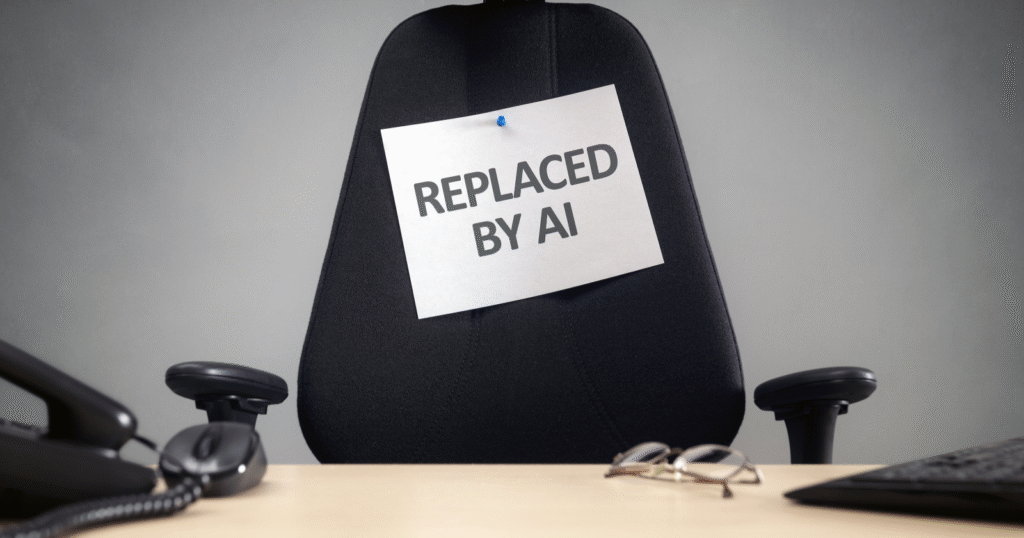

Kevin Indig’s Growth Memo offers disciplined strategic analysis in the SEO and growth field, and his columns rarely veer from careful, evidence-grounded argument. So, when he stepped outside his usual lane in June 2026 to say, simply, “Stop trying to replace people with AI,” it was more diagnosis than vent.
Indig calls the phenomenon “substitution positioning,” and his central claim is that selling AI as a replacement for humans wins short-term attention and costs you long-term credibility with the buyers and employees you most need. That framing should ring a bell for anyone who studies how markets respond to fear-based messaging over time. Theodore Levitt’s classic insight about marketing myopia, that companies fail when they define themselves by what they sell rather than what customers need, is a reasonable frame here. Substitution positioning is marketing myopia for the AI era. You get the headline, and you antagonize the relationship.
The uncomfortable part is that some of the boldest substitution claims have come from the very companies building the technology.
In January 2026, Anthropic CEO Dario Amodei predicted AI models would handle most or all of what software engineers do end-to-end within six to 12 months. That prediction aged poorly quickly. Demand for software engineers has continued to climb. In September 2025, OpenAI CEO Sam Altman predicted that customer support jobs handled by phone or computer would go to AI, and that this would be better for everyone. Customer service hiring then outpaced the broader job market almost immediately after.
I want to be careful here, because these aren’t just rhetorical misses. They are credibility liabilities that accumulate in the minds of the buyers, employees, and regulators that AI companies need on their side.
The Data Says Something Different From The Announcement
What makes Indig’s argument more than an opinion column is that he anchored it in two independent data sets that deserve more attention than they have received in the trade press.
The first comes from New York State, which in March 2025 became the first state in the country to require companies filing mass layoff notices to disclose whether “technological innovation or automation” was a contributing cause. Governor Kathy Hochul directed the state Department of Labor to add the question; employers can check a box and name the specific technology responsible. In the roughly 14 months since that requirement took effect, more than 160 companies filed WARN notices covering approximately 28,300 affected workers. The list includes Amazon and Goldman Sachs, both of which have publicly discussed AI’s productivity impact on their operations. Not one company checked the box attributing layoffs to AI or automation.
The second data set comes from the Yale Budget Lab, which has been tracking the Current Population Survey over the past 33 months specifically to measure whether AI has produced any measurable…
Source link
Disclaimer
We strive to uphold the highest ethical standards in all of our reporting and coverage. We blogs.grocliq.com want to be transparent with our readers about any potential conflicts of interest that may arise in our work. It’s possible that some of the investors we feature may have connections to other businesses, including competitors or companies we write about. However, we want to assure our readers that this will not have any impact on the integrity or impartiality of our reporting. We are committed to delivering accurate, unbiased news and information to our audience, and we will continue to uphold our ethics and principles in all of our work. Thank you for your trust and support.
Website Upgradation is going on for any glitch kindly connect at [email protected]