Publish original numbers. It’s the single most reliable lever for making a page more original, and the most defensible numbers are a byproduct of the business itself… not data you assembled to feed a content calendar.
The old play was paying a PR or research firm for a survey loosely tied to your product, like a car insurance FinTech buying road-trip research to land in Yahoo. That’s outdated. Almost every product now generates data worth publishing, and pulling it has never been easier.
You don’t need a research team. The bar to clear the field is lower than you think.
First-party data: The strongest correlation of originality
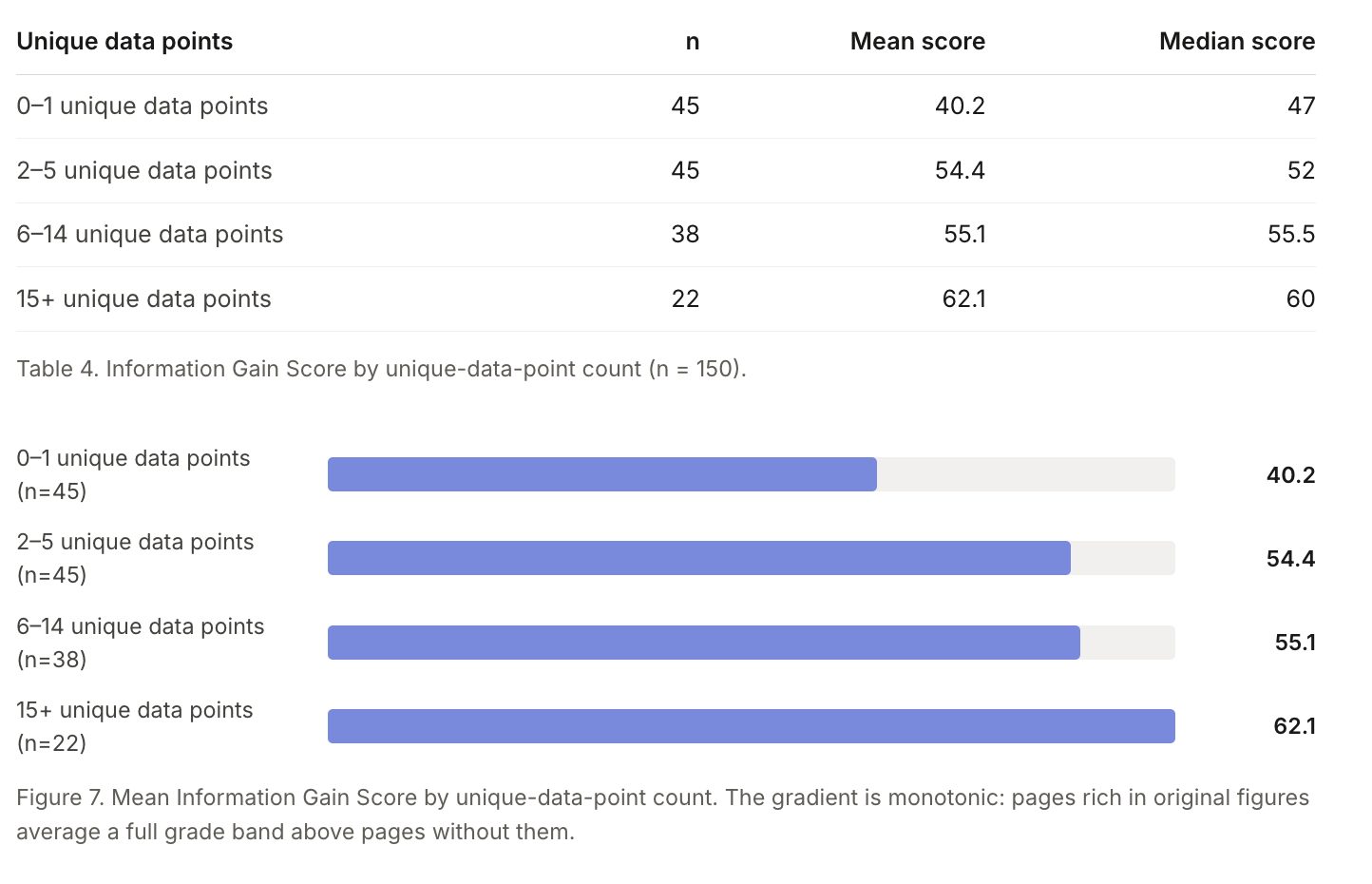
On-Page.ai’s recent information gain study scored 150 top-3 Google pages across 50 keywords and 10 verticals on how much each adds beyond the rest of its ranking cohort, grading the contribution from 0 to 100 by meaning rather than wording.
The median page scored 52, and original data correlated with that score more than any other page-level trait, including length.
Pages with at most 1 unique figure averaged an information gain score of 40.2, while pages with 15 or more averaged 62.1, and the score climbed steadily at every step in between
Good news, the bar to beat is low. The study found that it might not take much original evidence to outclass top-visible pages in classic Google search: top organic results typically have only 4 unique data points on average. Publish a page that includes more than 4 real original claims, figures, or answers, and that’s one more lever to pull for increasingly competitive organic visibility.
This analysis also found that in almost every search, there are plenty of adjacent unanswered questions that are being left on the table. On-Page ran their analysis with synthetic reader questions, a sample of plausible questions generated for the study, that were a closely related set to the search topic of each query, and results showed an open door for new pages to answer them and stand out. (Remind you of anything? Query fan-out, perhaps?)
We had a similar finding in an analysis of ChatGPT citations:
“A single evergreen page covering 10+ query intents is worth more in AI citation reach than 10 single-intent pages. The ROI of comprehensive content is front-loaded: one well-built page compounds citation reach over time. The long tail exists, but the top 5% of pages capture a disproportionate share of ongoing citation activity.” – The science of how AI picks its sources
In fact, your brand’s high-intent prompts should be monitored across a journey for this purpose. Turn them into journeys that follow the buyer across the five stages from Reasoning Lift: Problem, Exploration, Comparison, Validation, Selection. (Read more about more accurate AI prompt tracking here.) Answer those questions on the page with the knowledge and expertise that only your brand can to stay competitive against this finding in the analysis.
The main takeaway…
Source link
Disclaimer
We strive to uphold the highest ethical standards in all of our reporting and coverage. We blogs.grocliq.com want to be transparent with our readers about any potential conflicts of interest that may arise in our work. It’s possible that some of the investors we feature may have connections to other businesses, including competitors or companies we write about. However, we want to assure our readers that this will not have any impact on the integrity or impartiality of our reporting. We are committed to delivering accurate, unbiased news and information to our audience, and we will continue to uphold our ethics and principles in all of our work. Thank you for your trust and support.
Website Upgradation is going on for any glitch kindly connect at [email protected]