
Ranking within Google’s traditional search results provides diminishing returns. Ads, AI Overviews, and other search engine results page (SERP) features push organic links further down the page.
As the search landscape changes, how should brands adapt to ensure they’re represented in AI-powered responses?
The more you know about how AI engines use your brand’s information and when they cite it, the better you can use AI search to your advantage. With that knowledge, you can move beyond whether AI models know your brand and start developing your own AI visibility strategy.
Collapse of the click economy
It’s important for most brands to understand AI search and begin developing an AI SEO strategy as quickly as possible. While a full transformation from organic to AI search appears to be years away, AI SEO may eventually replace traditional SEO.
Google is already leaning heavily on AI search. As CEO Sundar Pichai said in an April article from The Verge:
- “Search had a strong quarter with AI experiences driving usage, queries at an all-time high, and 19% revenue growth.”
At the same time, users are adapting to AI search features. When users encounter an AI-powered summary in search results, they click a blue link just 8% of the time, a Pew Research study found. When they don’t encounter AI summaries, they click blue links 15% of the time.
Although AI search traffic is still limited, it tends to have a higher conversion rate than organic search traffic. AI traffic had a conversion rate of 11.4%, compared to 5.3% for organic search traffic, per a Similarweb study.
Be the brand AI recommends.
See where your brand appears in AI search, where competitors are winning, and what it takes to become the answer AI recommends.
See your AI visibility
Brand presence within AI engines: Usage vs. citation
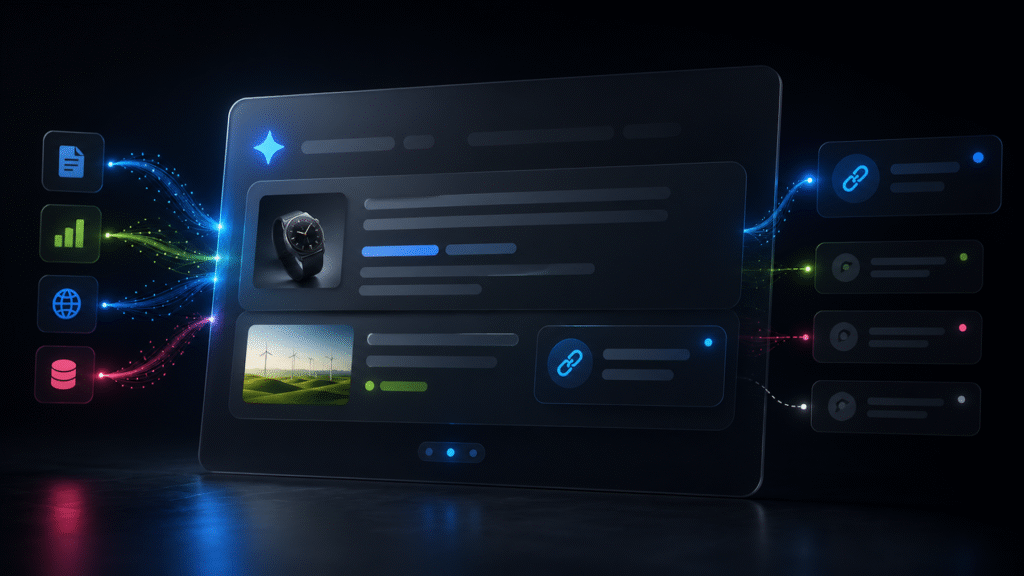
Brands can exist in AI systems in two distinct ways: usage and citation.
AI engines ingest information about your brand and use it when responding to search queries. This is somewhat similar to how Google traditionally indexes pages before ranking and serving them in search results.
When AI engines use your content, they may also mention your brand as an unlinked citation. This can drive discovery and may prompt users to search for and engage with your brand.
Citation occurs when an AI engine directly references your brand as a source of information. This may be a link to your web page, a link to your social profile, or a clickable phone link that lets users call you.
Within OpenAI, usage and citation rely on separate technical levers. As OpenAI’s documentation explains, there are four distinct user agents, with OAI-SearchBot and GPTBot deployed separately. Other AI systems have similar controls and measures that point to the same distinction.
Why citations are only part of the AI visibility…
Source link
Disclaimer
We strive to uphold the highest ethical standards in all of our reporting and coverage. We blogs.grocliq.com want to be transparent with our readers about any potential conflicts of interest that may arise in our work. It’s possible that some of the investors we feature may have connections to other businesses, including competitors or companies we write about. However, we want to assure our readers that this will not have any impact on the integrity or impartiality of our reporting. We are committed to delivering accurate, unbiased news and information to our audience, and we will continue to uphold our ethics and principles in all of our work. Thank you for your trust and support.
Website Upgradation is going on for any glitch kindly connect at [email protected]