
For most of the past decade, organic marketers have operated with a clear north star: visibility. Get on Page 1. Get in the featured snippet. Get seen.
That north star has now moved.
The question I put to the room at SMX Advanced on June 5 wasn’t, “How do you get found?” It was the even harder question: “How do you get chosen?”
In 2026, the answers are no longer the same, and the gap between them is where most brands lose ground.
In AI search, your reputation precedes you
The complex, multi-touchpoint user journey of exploration, evaluation, and conversion has been dramatically compressed. A single AI prompt now does the same work that previously required a dozen searches, three Reddit threads, and a couple of comparison sites.
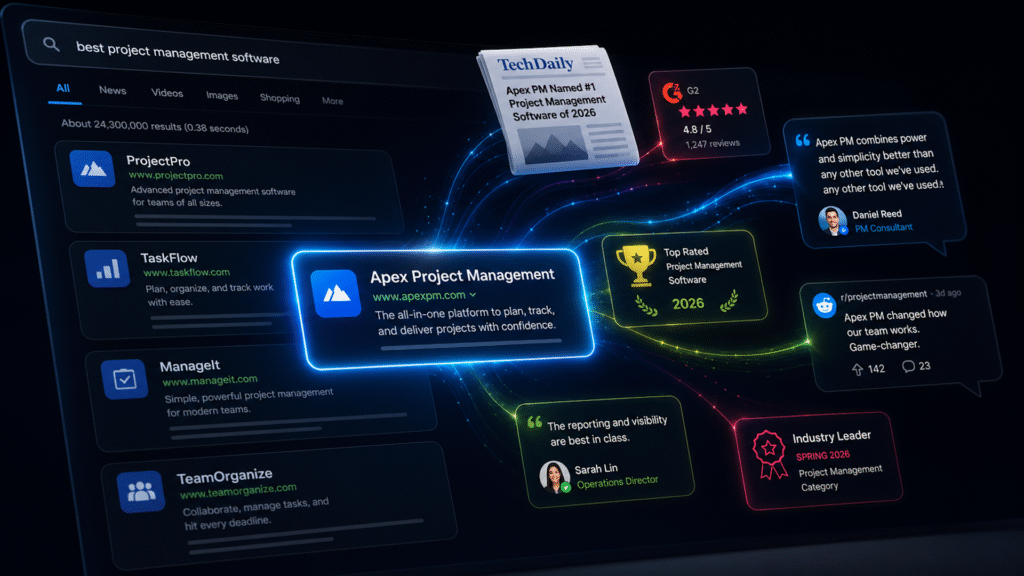
AI search doesn’t reward the brand that shouted the loudest in paid media or stuffed the most keywords into its metadata. Instead, it rewards the brand with the strongest reputation in the spaces that matter, the same spaces the user journey once encompassed. Reddit threads, comparison sites, and the like all get ingested by LLMs and blended into a single synthesized answer.

In other words, your brand is no longer just what you say it is. It’s how AI understands your brand, and the algorithm is reading everything everyone else has ever said about you.
Brand-owned content, across websites and social channels, will always be self-serving and promotional. AI looks for third-party validation to back up those claims.
This shift changes everything for organic marketers. Our job has gone beyond building visibility to building a brand that, once found, is correctly understood and ultimately chosen. Those are three distinct challenges, and they require three distinct strategies.
Be the brand AI recommends.
See where your brand appears in AI search, where competitors are winning, and what it takes to become the answer AI recommends.
See your AI visibility
Found: Be present in your audience’s actual search ecosystem
The first challenge is still about discoverability, but we now work with a much broader canvas than just Google. Consumers now discover brands across ChatGPT, Reddit, YouTube, TikTok, Google, Quora, LinkedIn, and, yes, word of mouth. There are dozens of entry points into the discovery ecosystem, and you need to be credibly present in the ones your specific audience actually uses.
This starts with understanding your audience’s sources of influence: the publications, platforms, communities, and voices they genuinely trust. The intersection of semantic relevance, domain authority, and audience affinity tells you which third-party properties are worth targeting. For one B2B audience, that might be Wired, Tom’s Guide, or a LinkedIn group that actively discusses vendors in a particular vertical. For another, it’s r/smallbusiness and a Substack newsletter with…
Source link
Disclaimer
We strive to uphold the highest ethical standards in all of our reporting and coverage. We blogs.grocliq.com want to be transparent with our readers about any potential conflicts of interest that may arise in our work. It’s possible that some of the investors we feature may have connections to other businesses, including competitors or companies we write about. However, we want to assure our readers that this will not have any impact on the integrity or impartiality of our reporting. We are committed to delivering accurate, unbiased news and information to our audience, and we will continue to uphold our ethics and principles in all of our work. Thank you for your trust and support.
Website Upgradation is going on for any glitch kindly connect at [email protected]