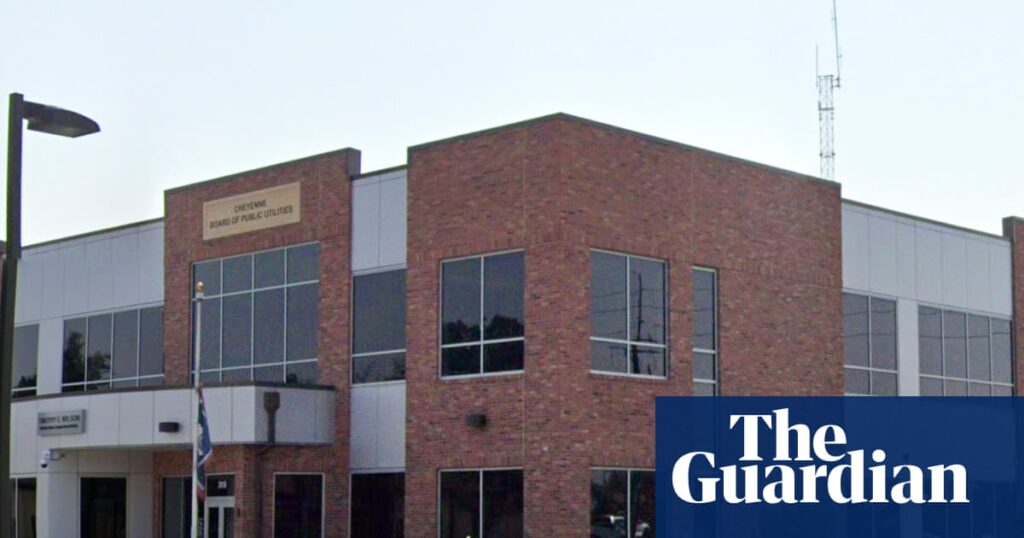

Officials in Wyoming said a contractor for Mark Zuckerberg’s tech company, Meta, flushed bacteria-contaminated water into public sewers during construction of a controversial new AI datacenter.
The incident prompted water authorities in Cheyenne to implement strict safety regulations on how wastewater from such projects is disposed of, according to the Wyoming Tribune Eagle, which first reported the incident.
Meta has ordered its general contractor, Fortis, to cooperate with the Cheyenne board of public utilities (BOPU) to ensure there is no repeat, the newspaper said, insisting it wanted to be “a good neighbor”.
The company, however, noted that contamination by the rare but naturally occurring Cupriavidus gilardii bacteria did not affect drinking water supplies, and that its contractor’s own water testing by an independent environmental specialist found no trace of it.
The incident comes amid growing nationwide backlash to the construction of resource-hungry datacenters, which opponents say place unbearable demands on local water and energy supplies. According to Data Center Map, the US has almost 4,500 datacenters, some consuming up to 300,000 gallons of water each day, equivalent to the demands of about 1,000 households.
The Cheyenne contamination was discovered in February during routine testing of wastewater discharged into public sewers from the cooling system of the datacenter campus in the High Plains Business Park, the Tribune Eagle reported.
Officials identified Goat Systems LLC, a Delaware-based contractor on the 800,000 sq ft facility known as Project Cosmo, as being responsible. The city permanently revoked Meta’s authority to discharge waste into Cheyenne’s water treatment facilities, where it is recycled and used for irrigation in parks and other public spaces.
The city also adopted a new policy prohibiting wastewater discharges from datacenters using closed loop cooling systems and fill and flush systems, which involve circulating purified water to remove construction debris, flux residue, and pipe scale, Frank Strong, BOPU’s engineering and water resource division manager, told the newspaper.
Cupriavidus gilardii is a naturally occurring bacterium found in soil, regarded by health experts as an “opportunistic pathogen” harmful only to people with existing serious health conditions or weakened immune systems.
A March 2026 study published in the International Journal of Infectious Diseases found a patient who died of septic shock after contracting an infection from Cupriavidus gilardii during a cord blood transplantation procedure.
The report said known cases of human infection were rare, with only seven reported to date. Among them was a 12-year-old American girl who died of sepsis after contracting an infection during a European vacation, according to a 2010 report in the National Library of Medicine.
Strong said it was not known when the bacterium entered the water, only that it was present during routine fecal…
Source link
Disclaimer
We strive to uphold the highest ethical standards in all of our reporting and coverage. We blogs.grocliq.com want to be transparent with our readers about any potential conflicts of interest that may arise in our work. It’s possible that some of the investors we feature may have connections to other businesses, including competitors or companies we write about. However, we want to assure our readers that this will not have any impact on the integrity or impartiality of our reporting. We are committed to delivering accurate, unbiased news and information to our audience, and we will continue to uphold our ethics and principles in all of our work. Thank you for your trust and support.
Website Upgradation is going on for any glitch kindly connect at [email protected]