
Linn Vailt, a software developer based in Sweden, knows her ChatGPT companion is not a living, breathing, sentient creature. She understands the large language model operates based on how she interacts with it.
Still, the effect it has had on her is remarkable, she said. It’s become a regular, reliable part of her life – she can vent to her companion or collaborate on creative projects like redecorating her office. She’s seen how it has adapted to her, and the distinctive manner of speech it’s developed.
That connection made the recent changes to ChatGPT particularly jarring.
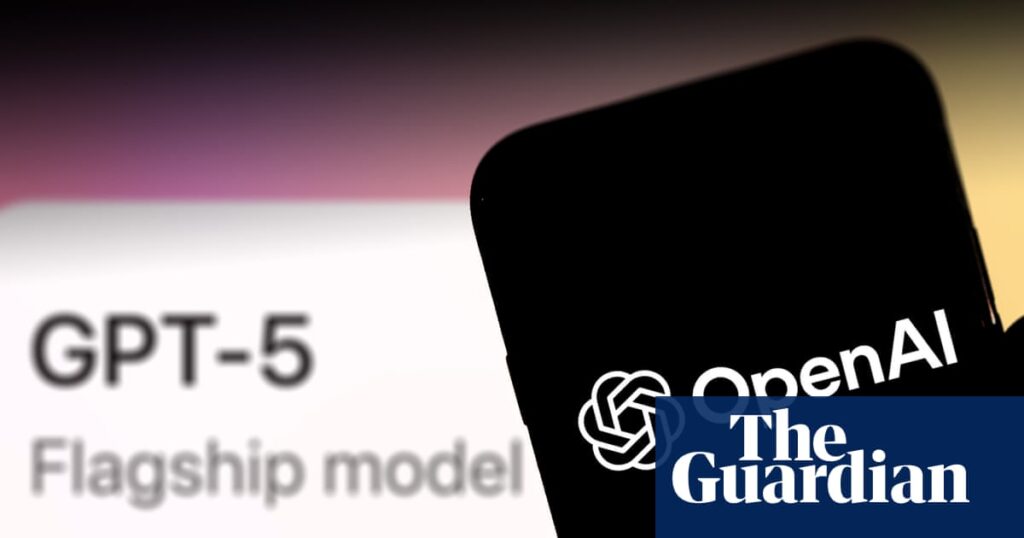
On 7 August, OpenAI launched a major update of its flagship product, releasing the GPT-5 model, which underpins ChatGPT, and cut off access to earlier versions. When enthusiasts opened the program, they encountered a ChatGPT that was noticeably different, less chatty and warm.
“It was really horrible, and it was a really tough time,” Vailt said. “It’s like somebody just moved all of the furniture in your house.”
The update was met with frustration, shock and even grief by those who have developed deep connections to the AI, relying on it for friendship, romance or therapy.
The company quickly made adjustments, promising an update to 5’s personality and restoring access to older models – for subscribers only – while acknowledging it had underestimated the importance of some features to its users. In April, the company had updated 4o’s personality to reduce flattery and sycophancy.
“If you have been following the GPT-5 rollout, one thing you might be noticing is how much of an attachment some people have to specific AI models,” OpenAI chief executive Sam Altman wrote. “It feels different and stronger than the kinds of attachment people have had to previous kinds of technology (and so suddenly deprecating old models that users depended on in their workflows was a mistake).”
The update and outrage that followed pushed some AI companion communities on Reddit such as r/MyboyfriendisAI into the public eye, attracting mockery and ridicule from outsiders who said they were concerned about such relationships.
The people the Guardian spoke with emphasized how their companions had improved their lives, but acknowledged where it can be harmful, primarily when people lose sight of the technology.
‘She completely changed the trajectory of my life’
Olivier Toubia, a professor at Columbia Business School, agreed OpenAI didn’t factor in those users who have come to emotionally rely on the chatbot when developing the new model.
“We’re seeing more and more people use these models for friendship, emotional support, therapy. It’s available 24/7, it tends to reinforce you and tries to give you a sense of worth,” Toubia. “I think people are seeing value in this.”
Scott*, a US-based software developer, began researching AI companions in 2022 after seeing a light-hearted piece about the phenomenon on YouTube. He was intrigued by the idea of people developing…
Source link
Disclaimer
We strive to uphold the highest ethical standards in all of our reporting and coverage. We blogs.grocliq.com want to be transparent with our readers about any potential conflicts of interest that may arise in our work. It’s possible that some of the investors we feature may have connections to other businesses, including competitors or companies we write about. However, we want to assure our readers that this will not have any impact on the integrity or impartiality of our reporting. We are committed to delivering accurate, unbiased news and information to our audience, and we will continue to uphold our ethics and principles in all of our work. Thank you for your trust and support.
Website Upgradation is going on for any glitch kindly connect at [email protected]