
Just two days ago, OpenAI released its latest text-to-video-and audio-generator, Sora 2, which comes with a built-in — and currently invite-only — TikTok-style social app for sharing AI videos.
It didn’t take long for users to notice that the company did little to ensure it didn’t spit out grotesque — and possibly copyright-infringing — materials.
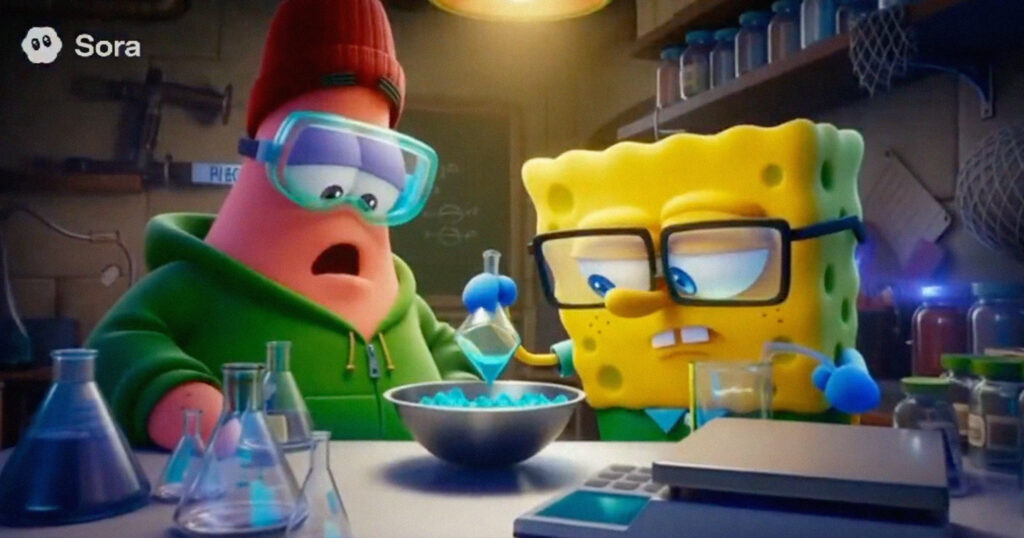
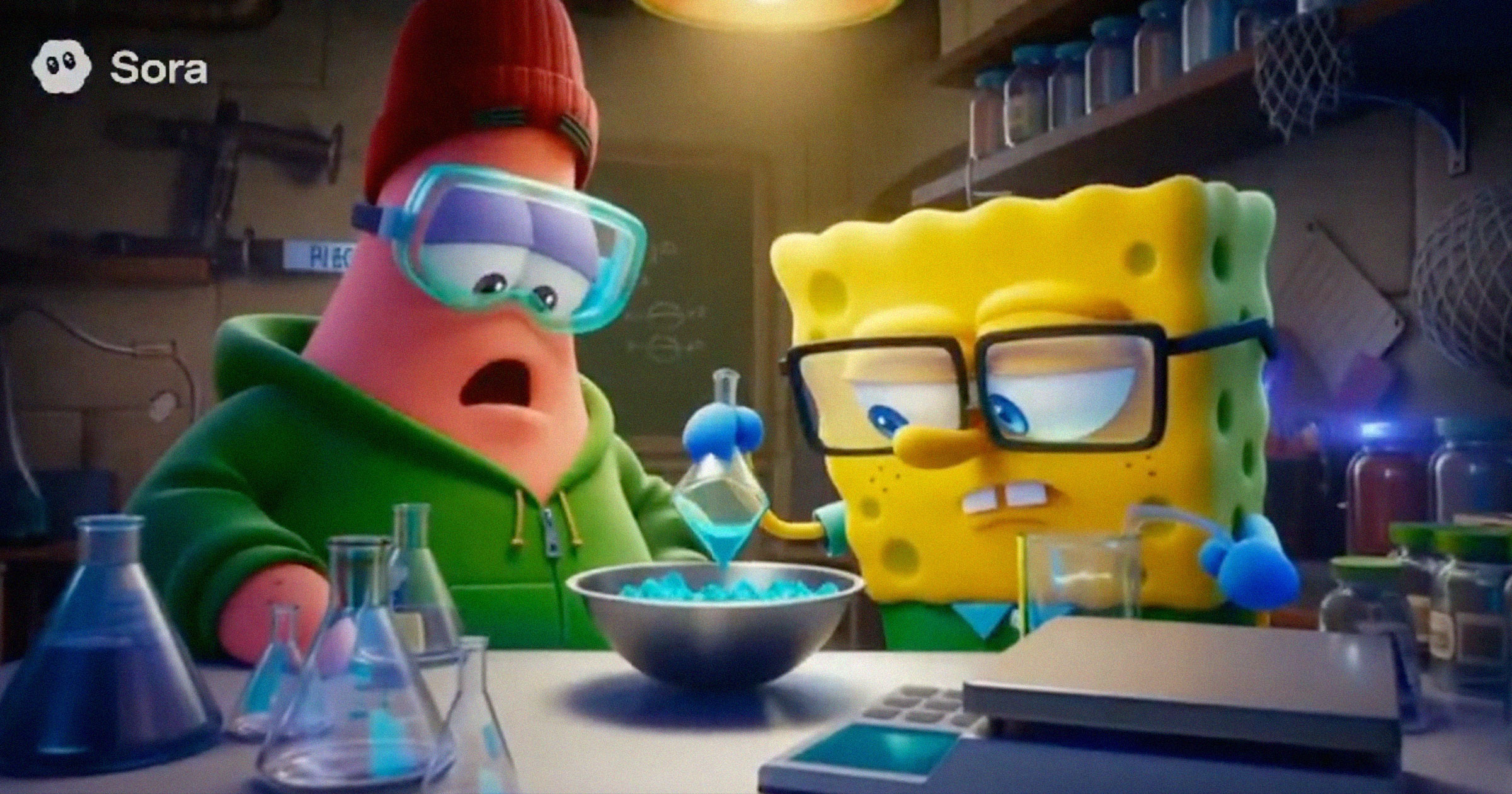
In one video that went viral on X-formerly-Twitter, a cleanly-animated clip shows Nickelodeon’s SpongeBob SquarePants cooking up blue crystals in a meth lab under the sea, much in the style of AMC’s iconic “Breaking Bad” television series.
It’s not just unmistakably SpongeBob and his friend Patrick visually taking on the role of Walter White and Jesse Pinkman in “Breaking Bad”; the clip features fully-fledged, AI-generated takes on the characters’ iconic voices as well.
“We don’t call it ‘stuff,’ Patrick,” the anthropomorphized sponge tells its compatriot. “It’s Blue Barnacle. Purest you’ll find under the sea.”
The clip demonstrates how little OpenAI has done to prevent its tool from being used to generate copyright-protected material. It’s a hotly debated topic that has already led to major Hollywood studios suing AI generator companies. Last month, Warner Bros. Discovery sued Midjourney for infringement, joining Disney and NBCU, which had teamed up to sue the firm for similar reasons in June.
For Sora 2, OpenAI has also said that rights holders will have to actively opt out of having their copyrighted materials appear in generations, as the Wall Street Journal reported earlier this week.
“Given the intense competition in the space, I think they think, ‘maybe we will ask for forgiveness instead of asking for permission,’” Georgetown Law School professor Kristelia García told the newspaper.
OpenAI has repeatedly argued that the use of copyrighted material falls under “fair use,” a thorny doctrine that allows the use of copyrighted material without permission for transformative purposes like commentary, criticism, or news reporting.
OpenAI has also leaned on a familiar argument: that if the United States doesn’t do it, China will.
“If the PRC’s developers have unfettered access to data and American companies are left without fair use access, the race for AI is effectively over,” reads an OpenAI policy proposal to the White House’s Office of Science and Technology.
While the debate rages on, OpenAI’s hot new video generator is already clogging up social media feeds with a torrent of AI slop.
A search…
Source link
Disclaimer
We strive to uphold the highest ethical standards in all of our reporting and coverage. We blogs.grocliq.com want to be transparent with our readers about any potential conflicts of interest that may arise in our work. It’s possible that some of the investors we feature may have connections to other businesses, including competitors or companies we write about. However, we want to assure our readers that this will not have any impact on the integrity or impartiality of our reporting. We are committed to delivering accurate, unbiased news and information to our audience, and we will continue to uphold our ethics and principles in all of our work. Thank you for your trust and support.
Website Upgradation is going on for any glitch kindly connect at [email protected]