
This exemplifies how Huawei is developing agentic AI systems that move beyond simple command-response interactions toward platforms capable of independent planning, decision-making, and execution.
Huawei’s approach to building these agentic AI systems centres on a comprehensive strategy spanning AI infrastructure, foundation models, specialised tools, and agent platforms.
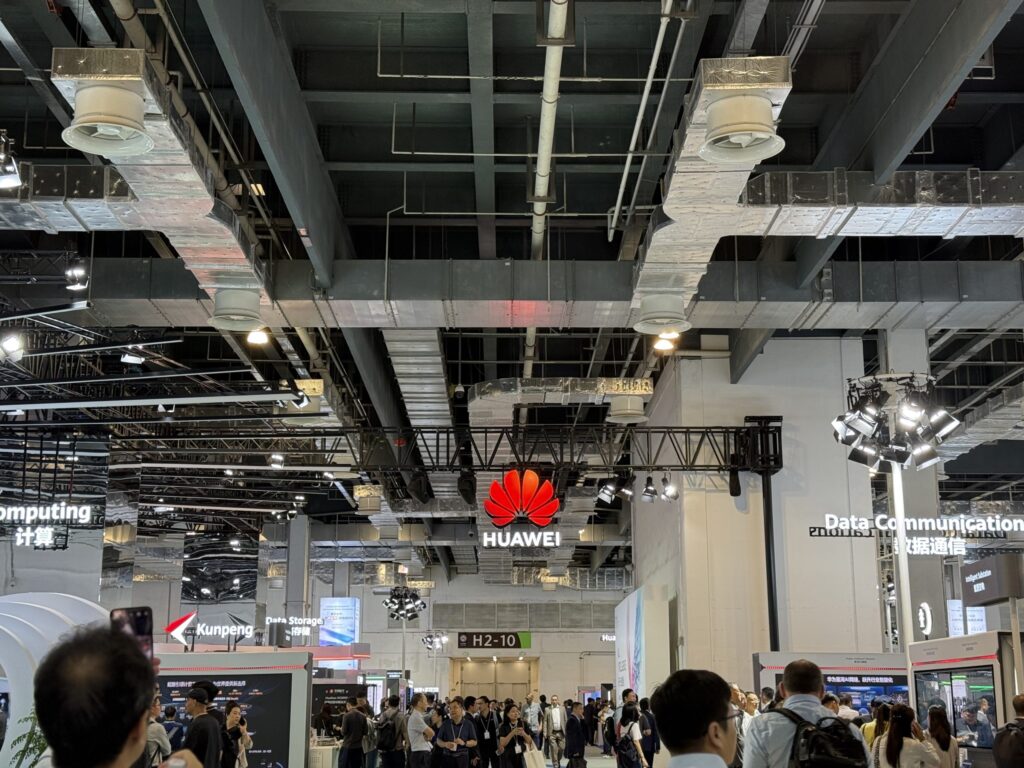
Zhang Yuxin, CTO of Huawei Cloud, outlined this framework at the recent Huawei Cloud AI Summit in Shanghai, where over 1,000 leaders from politics, business, and technology examined practical implementations across finance, shipping ports, chemical manufacturing, healthcare, and autonomous driving.
The distinction matters because traditional AI applications respond to user commands within fixed processes, while agentic AI systems operate with autonomy that fundamentally changes their role in enterprise operations.
Zhang characterised this as “a major shift in applications and compute,” noting that these systems make decisions independently and adapt dynamically, reshaping how computing systems interact and allocate resources. The question for enterprises becomes: how do you build infrastructure and platforms capable of supporting this level of autonomous operation?
Infrastructure challenges drive new computing architectures
The computational demands of agentic AI systems have exposed limitations in traditional cloud architectures, particularly as foundation model training and inference requirements surge.
Huawei Cloud’s response involves CloudMatrix384 supernodes connected through a high-speed MatrixLink network, creating what the company describes as a flexible hybrid compute system combining general-purpose and intelligent compute capabilities.
The architecture specifically addresses bottlenecks in Mixture of Experts (MoE) models through expert parallelism inference, which reduces NPU idle time during data transfers. According to the company’s technical specifications, this approach boosts single-PU inference speed 4-5 times compared to other popular models.
The system also incorporates memory-centric AI-Native Storage designed for typical AI tasks, aimed at enhancing both training and inference efficiency. ModelBest, a company specialising in general-purpose AI and device intelligence, demonstrated…
Source link
Disclaimer
We strive to uphold the highest ethical standards in all of our reporting and coverage. We blogs.grocliq.com want to be transparent with our readers about any potential conflicts of interest that may arise in our work. It’s possible that some of the investors we feature may have connections to other businesses, including competitors or companies we write about. However, we want to assure our readers that this will not have any impact on the integrity or impartiality of our reporting. We are committed to delivering accurate, unbiased news and information to our audience, and we will continue to uphold our ethics and principles in all of our work. Thank you for your trust and support.
Website Upgradation is going on for any glitch kindly connect at [email protected]