
Google is rolling out a change to how ads appear in Search, and this time it’s focused on clarity and user control.
Text ads will now be grouped under a single “Sponsored results” label that stays visible as you scroll. In addition, a new “Hide sponsored results” option lets users collapse the entire ad block with one click.
This update doesn’t change how ads are served or ranked, but it does change how they’re presented to users. Even small interface updates can influence how people interact with search results, so advertisers should pay attention to how this evolves over time.
A Look at the New Sponsored Label on Google Search
Previously, each text ad showed a small “Sponsored” label at the top of each ad.
Now, Google is grouping all text ads together with a single header that clearly signals where the sponsored section begins and ends. That label remains visible even if the user scrolls down the page.
While doing a Search in the wild, the new format appeared, even with just one ad:
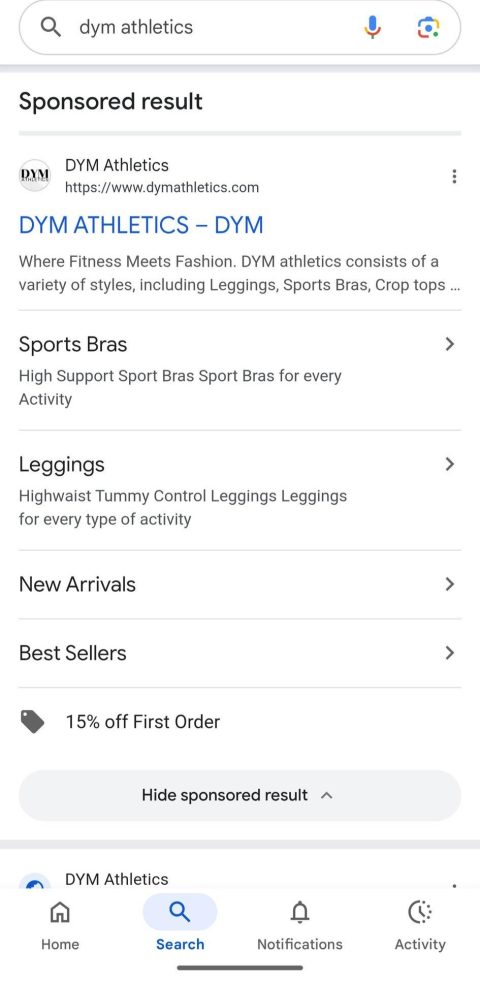 Screenshot taken by author
Google is also extending this approach to other formats. For example, Shopping placements will use a “Sponsored products” label.
On results that include AI Overviews, the sponsored section can appear above or below the AI-generated content, but it will still follow the same grouping and labeling format.
The most noticeable addition is the ability to collapse all sponsored results. Not every user will hide the section, but the option itself introduces a new behavior that didn’t exist before.
Google noted that these updates are rolling out globally to users on both desktop and mobile
Why This Matters to Advertisers
From a performance perspective, the underlying mechanics are unchanged. Bidding, Quality Score, ranking, and the maximum number of ads (up to four in a block) all remain the same.
That said, grouping ads together can influence how users perceive them.
When ads are visually separated from organic listings, the difference between the two becomes more intentional.
Users who skim results may pause and decide whether to interact with the sponsored block at all. For lower-intent searches, this could result in fewer casual clicks. For higher-intent queries, the impact may be minimal.
This puts more pressure on the quality of the ad itself. Clear value propositions, relevant messaging, and strong alignment with search intent will matter even more.
Ranking at the top will still be valuable, but visibility alone won’t guarantee engagement if users are more aware of what they’re clicking.
While the update is primarily visual, advertisers should keep an eye on performance once it fully rolls out across mobile and desktop. A few areas to watch include:
- Changes in CTR or Impression-to-Click patterns
- Differences in engagement based on query intent
- Any vertical-specific impact where users are more likely to hide ads
Early shifts may be small, but trends could emerge over time as users adjust to the new layout.
Source link
Disclaimer
We strive to uphold the highest ethical standards in all of our reporting and coverage. We blogs.grocliq.com want to be transparent with our readers about any potential conflicts of interest that may arise in our work. It’s possible that some of the investors we feature may have connections to other businesses, including competitors or companies we write about. However, we want to assure our readers that this will not have any impact on the integrity or impartiality of our reporting. We are committed to delivering accurate, unbiased news and information to our audience, and we will continue to uphold our ethics and principles in all of our work. Thank you for your trust and support.
Website Upgradation is going on for any glitch kindly connect at [email protected]