

TL;DR
- When it comes to LLM visibility, not all brands are created equal. For some, it matters far more than others.
- LLMs give different answers to the same question. Trackers combat this by simulating prompts repeatedly to get an average visibility/citation score.
- While simulating the same prompts isn’t perfect, secondary benefits like sentiment analysis are not SEO-specific issues. Which right now is a good thing.
- Unless a visibility tracker offers enough scale at a reasonable price, I would be wary. But if the traffic converts well and you need to know more, get tracking.
 (Image Credit: Harry Clarkson-Bennett)
A small caveat to start. This really depends on how your business makes money and whether LLMs are a fundamental part of your audience journey. You need to understand how people use LLMs and what it means for your business.
Brands that sell physical products have a different journey from publishers that sell opinion or SaaS companies that rely more deeply on comparison queries than anyone else.
Or a coding company destroyed by one snidey Reddit moderator with a bone to pick…
For example, Ahrefs made public some of its conversion rate data from LLMs. 12.1% of their signups came from LLMs from just 0.5% of their total traffic. Which is huge.
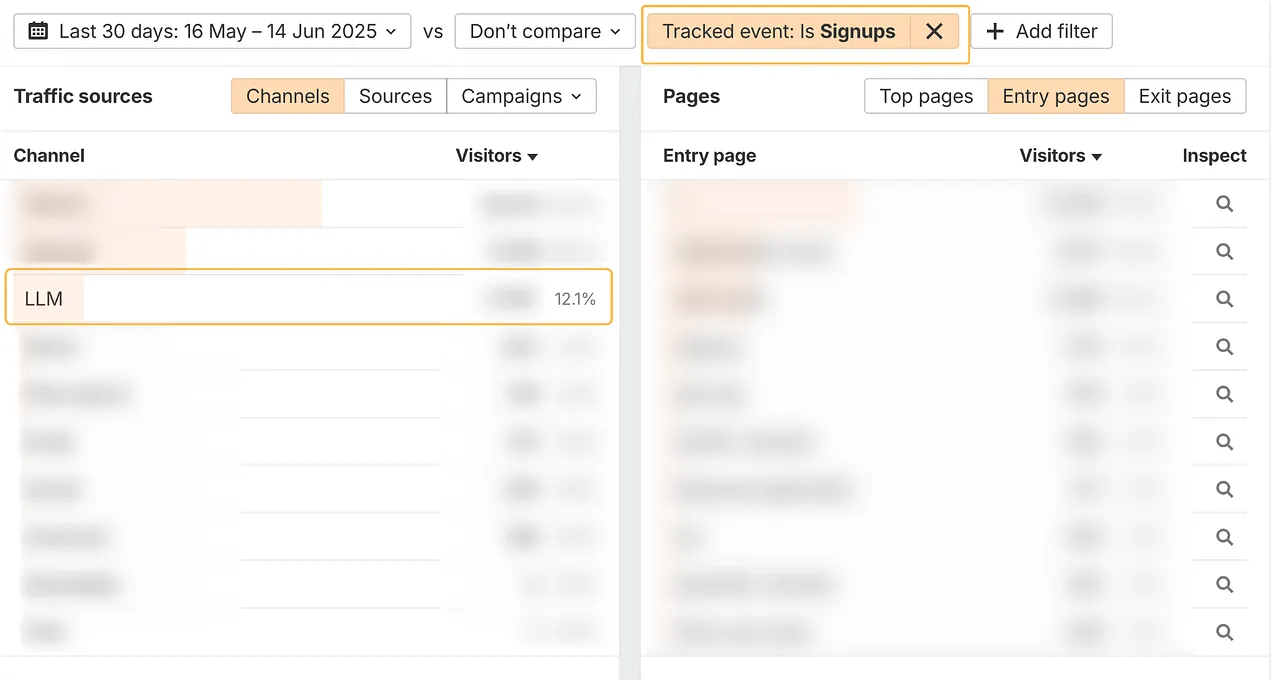 AI search visitors convert 23x better than traditional organic search visitors for Ahrefs. (Image Credit: Harry Clarkson-Bennett)
But for us, LLM traffic converts significantly worse. It is a fraction of a fraction.
Honestly, I think LLM visibility trackers at this scale are a bit here today and gone tomorrow. If you can afford one, great. If not, don’t sweat it. Take it all with a pinch of salt. AI search is just a part of most journeys, and tracking the same prompts day in, day out has obvious flaws.
They’re just aggregating what someone said about you on Reddit while they’re taking a shit in 2016.
What Do They Do?
Trackers like Profound and Brand Radar are designed to show you how your brand is framed and recommended in AI answers. Over time, you can measure yours and your competitors’ visibility in the platforms.
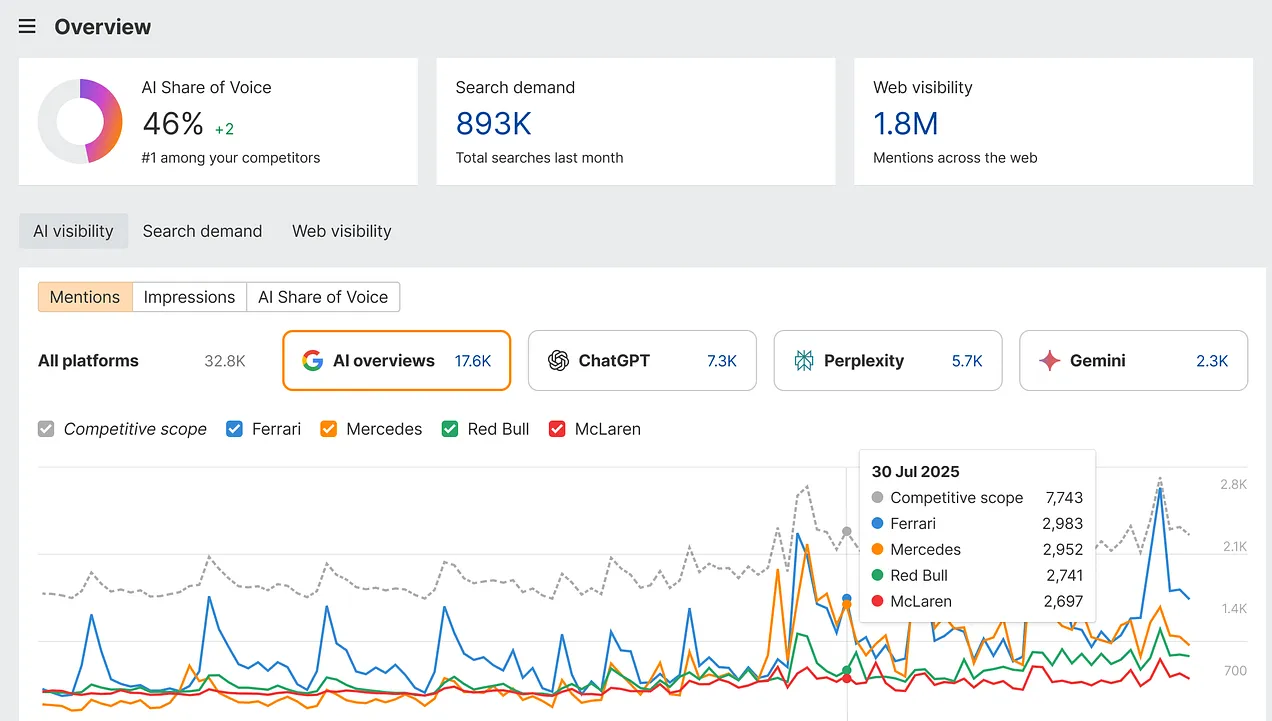 Image Credit: Harry Clarkson-Bennett
But LLM visibility is smoke and mirrors.
Ask a question, get an answer. Ask the same question, to the same machine, from the same computer, and get a different answer. A different answer with different citations and businesses.
It has to be like this, or else we’d never use the boring ones.
To combat the inherent variance determined by their temperature setting, LLM trackers simulate prompts repeatedly throughout the day. In doing so, you get an average visibility and citation score alongside some other genuinely useful add-ons like your sentiment score and some competitor benchmarking.
“Higher values like 0.8 will make the output more random, while lower values like 0.2 will make it more focused and deterministic.”
Simulate a prompt 100 times. If your content was used in 70 of the…
Source link
Disclaimer
We strive to uphold the highest ethical standards in all of our reporting and coverage. We blogs.grocliq.com want to be transparent with our readers about any potential conflicts of interest that may arise in our work. It’s possible that some of the investors we feature may have connections to other businesses, including competitors or companies we write about. However, we want to assure our readers that this will not have any impact on the integrity or impartiality of our reporting. We are committed to delivering accurate, unbiased news and information to our audience, and we will continue to uphold our ethics and principles in all of our work. Thank you for your trust and support.
Website Upgradation is going on for any glitch kindly connect at [email protected]