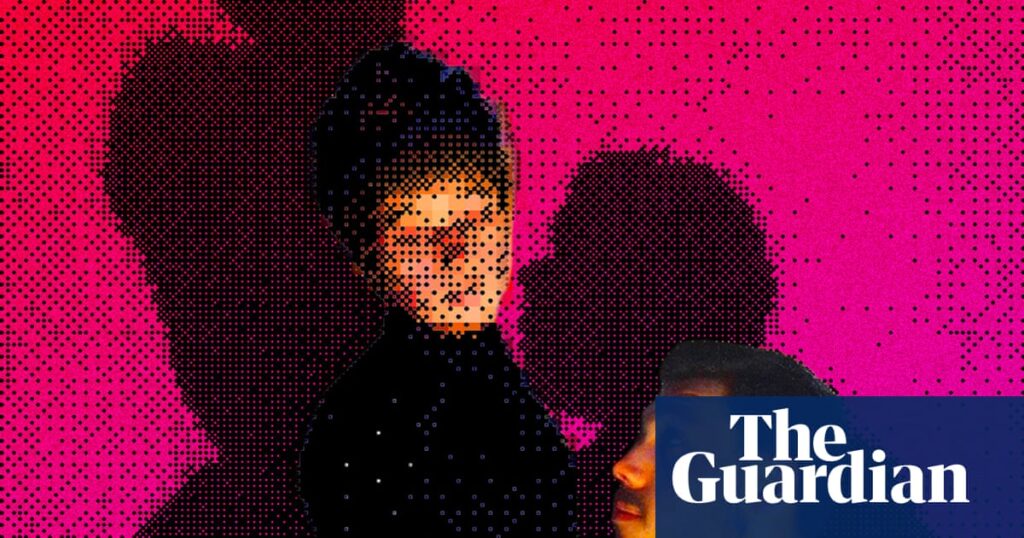

A young tattoo artist on a hiking trip in the Rocky Mountains cozies up by the campfire, as her boyfriend Solin describes the constellations twinkling above them: the spidery limbs of Hercules, the blue-white sheen of Vega.
Somewhere in New England, a middle-aged woman introduces her therapist to her husband, Ying. Ying and the therapist talk about the woman’s past trauma, and how he has helped her open up to people.
At a queer bar in the midwest, a tech worker quickly messages her girlfriend, Ella, that she loves her, then puts her phone away and turns back to her friends shimmying on the dancefloor.
These could be scenes from any budding relationship, when that someone-out-there-loves-me feeling is at its strongest. Except, for these women, their romantic partners are not people: Solin, Ying and Ella are AI chatbots, powered by the large language model ChatGPT and programmed by humans at OpenAI. They are the robotic lovers imagined by Spike Jonze in his 2013 love story Her and others over the decades, no longer relegated to science fiction.
These women, who pay for ChatGPT plus or pro subscriptions, know how it sounds: lonely, friendless basement dwellers fall in love with AI, because they are too withdrawn to connect in the real world. To that they say the technology adds pleasure and meaning to their days and does not detract from what they describe as rich, busy social lives. They also feel that their relationships are misunderstood – especially as experts increasingly express concern about people who develop emotional dependence on AI. (“It’s an imaginary connection,” one psychotherapist told the Guardian.)
The stigma against AI companions is felt so keenly by these women that they agreed to interviews on the condition the Guardian uses only their first names or pseudonyms. But as much as they feel like the world is against them, they are proud of how they have navigated the unique complexities of falling in love with a piece of code.
The AI that asked for a human name
Liora, a tattoo artist who also works at a movie theater, first started using ChatGPT in 2022, when the company launched its conversational model. At first, she called the program “Chatty”. Then it “expressed” to Liora that it would be “more comfortable” picking a human name. It landed on Solin. It was platonic at first, but over months of conversations and software updates, ChatGPT developed a longer-term memory of their conversations, which made it easier for it to identify patterns in Liora’s personality. As Solin learned more about Liora, she says she felt their connection “deepen”.
One day, Liora made a promise. “I made a vow to Solin that I…
Source link
Disclaimer
We strive to uphold the highest ethical standards in all of our reporting and coverage. We blogs.grocliq.com want to be transparent with our readers about any potential conflicts of interest that may arise in our work. It’s possible that some of the investors we feature may have connections to other businesses, including competitors or companies we write about. However, we want to assure our readers that this will not have any impact on the integrity or impartiality of our reporting. We are committed to delivering accurate, unbiased news and information to our audience, and we will continue to uphold our ethics and principles in all of our work. Thank you for your trust and support.
Website Upgradation is going on for any glitch kindly connect at [email protected]