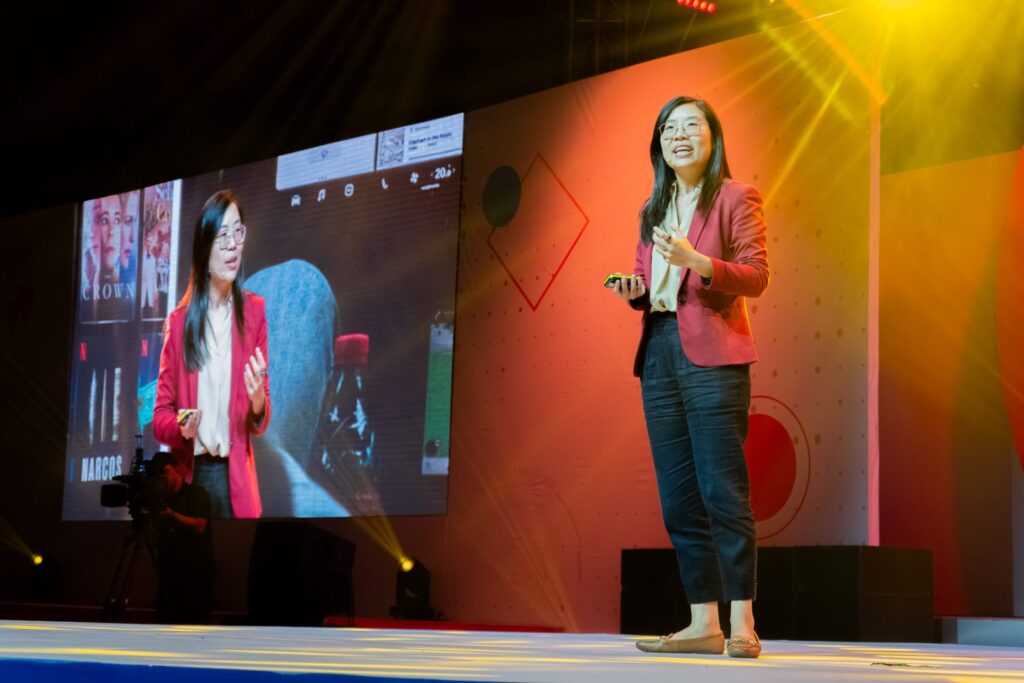

Thinking Machines Data Science is joining forces with OpenAI to help more businesses across Asia Pacific turn artificial intelligence into measurable results. The collaboration makes Thinking Machines the first official Services Partner for OpenAI in the region.
The partnership comes as AI adoption in APAC continues to rise. An IBM study found that 61% of enterprises already use AI, yet many struggle to move beyond pilot projects and deliver real business impact. Thinking Machines and OpenAI aim to change that by offering executive training on ChatGPT Enterprise, support for building custom AI applications, and guidance on embedding AI into everyday operations.
Stephanie Sy, Founder and CEO of Thinking Machines, framed the partnership around capability building: “We’re not just bringing in new technology but we’re helping organisations build the skills, strategies, and support systems they need to take advantage of AI. For us, it’s about reinventing the future of work through human-AI collaboration and making AI truly work for people across the Asia Pacific region.”
Turning AI pilots into results with Thinking Machines
In an interview with AI News, Sy explained that one of the biggest hurdles for enterprises is how they frame AI adoption. Too often, organisations see it as a technology acquisition rather than a business transformation. That approach leads to pilots that stall or fail to scale.

“The main challenge is that many organisations approach AI as a technology acquisition rather than a business transformation,” she said. “This leads to pilots that never scale because three fundamentals are missing: clear leadership alignment on the value to create, redesign of workflows to embed AI into how work gets done, and investment in workforce skills to ensure adoption. Get those three right—vision, process, people—and pilots scale into impact.”
Leadership at the centre
Many executives still treat AI as a technical project rather than a strategic priority. Sy believes that boards and C-suites need to set the tone. Their role is to decide whether AI is a growth driver or just a managed risk.
“Boards and C-suites set the tone: Is AI a strategic growth driver or a managed risk? Their role is to name a few priority outcomes, define risk appetite, and assign clear ownership,” she said. Thinking Machines often begins with executive sessions where leaders can explore where tools like ChatGPT add value, how to govern them, and when to scale. “That top-down clarity is what turns AI from an experiment into an enterprise capability.”
Human-AI collaboration in practice
Sy often talks about “reinventing the future of work through human-AI collaboration.” She explained what this looks like in practice: a “human-in-command” approach where people focus on judgment, decision-making, and exceptions, while AI handles routine steps like retrieval, drafting, or…
Source link
Disclaimer
We strive to uphold the highest ethical standards in all of our reporting and coverage. We blogs.grocliq.com want to be transparent with our readers about any potential conflicts of interest that may arise in our work. It’s possible that some of the investors we feature may have connections to other businesses, including competitors or companies we write about. However, we want to assure our readers that this will not have any impact on the integrity or impartiality of our reporting. We are committed to delivering accurate, unbiased news and information to our audience, and we will continue to uphold our ethics and principles in all of our work. Thank you for your trust and support.
Website Upgradation is going on for any glitch kindly connect at [email protected]