
This post was sponsored by Visto. The opinions expressed in this article are the sponsor’s own.
Clients keep asking a new question: “Are we visible in AI search?”
This is the reality: Google’s AI Overviews are reducing organic traffic by 30-70% for many businesses.
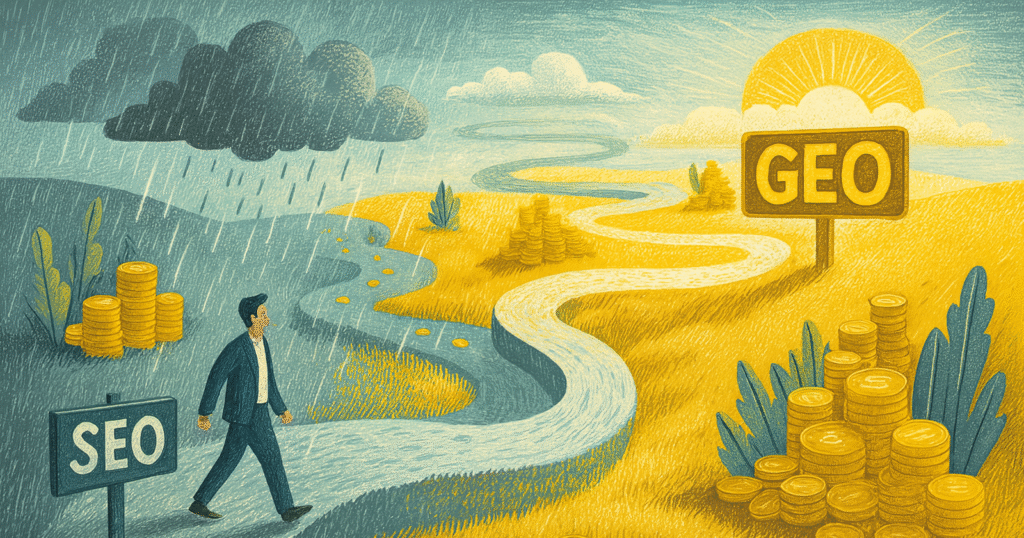
In fact, we’re seeing that SEO agencies that incorporate GEO (Generative Engine Optimization) tactics into their SEO strategy and offerings are charging $4,000/month for these additional menu services.
However, when it comes to GEO, a newly evolved and still-evolving branch of SEO, answering the AI visibility question is:
- Less about grand strategy.
- More about a quick field check.
But if you skip the check and jump straight to fixes, you risk solving the wrong problem.
Phase 1. Perform An AI Visibility Audit To Confirm If There Is A Visibility Gap
Start with a simple AI Visibility Audit:
- Select five to 10 key phrases that align with the business’s goals.
- Search those phrases across Google’s AI Overviews, Bing Copilot, Perplexity, and ChatGPT.
- Look at the AI answer first, not the classic blue links.
- Do you show up? Are you cited? Which competitors are visible and cited? Notate this for each phrase.
- Notate down which competitors are cited and where any links point; take screenshots to showcase in any presentations.
Once you identify which phrases you display and those you do not, you can begin to build a comprehensive audit, repeating the steps as you would for keyword research or, traditionally, People Also Ask research.
The Easy Way: Use this AI Visibility audit and bring the snapshot to your next client call. It gets you out of the “we think” zone and into “here’s what we saw today.”
Phase 2. Interpret Your AI Visibility From The Audit Results
Once you have your audit results in hand, it’s time to determine where you stand:
- Highly visible: Your brand is named inside the answer. Great. Assess what’s working, and expand upon it.
- Partially visible: Your content fuels the answer, but the brand is missing. That erodes authority over time.
- Absent: The answer engines are leaning on other sources. That’s your gap, and your opportunity.
Notice how some of this is traditional ranking talk, and other facets are new.
So, it’s time for a new lens here.
Look at GEO as more of a traffic channel, as opposed to a new technique: Do we show up in the answer people actually read?
This is where agencies need to act fast. If you’re not helping clients with GEO now, they’ll find someone who will.
Phase 3. Showcase The Real Problem Behind Falling Organic Traffic
In this step, it’s time to connect the dots for everyone outside of your SEO team.
How will clients or bosses handle a change to your reporting?
What is the best way to convince a stakeholder that they need additional SEO services to stay ahead during the GEO boom?
How To Clarify The AI Addition To SEO For Clients & Stakeholders
This is how to turn a…
Source link
Disclaimer
We strive to uphold the highest ethical standards in all of our reporting and coverage. We blogs.grocliq.com want to be transparent with our readers about any potential conflicts of interest that may arise in our work. It’s possible that some of the investors we feature may have connections to other businesses, including competitors or companies we write about. However, we want to assure our readers that this will not have any impact on the integrity or impartiality of our reporting. We are committed to delivering accurate, unbiased news and information to our audience, and we will continue to uphold our ethics and principles in all of our work. Thank you for your trust and support.
Website Upgradation is going on for any glitch kindly connect at [email protected]