
Where is search going to develop? Is ChatGPT a threat or an opportunity? Is optimizing for large language models (LLMs) the same as optimizing for search engines? These are some of the critical questions that are top of mind for both SEOs and CMOs as we head into a multi-search world.
In Part 2 of this two-part interview series, I try to answer these questions based on data from our internal research to provide some clear direction and focus to help navigate considerable change. If you haven’t already, go back and read Part 1.
What you will learn in this Part 2:
- Traditional Search Engine Results Page (SERP) Evolution: Why traditional search isn’t dying but fundamentally transforming, where it still excels, and how it is part of Google’s integrated approach to AI evolution.
- Google AI Mode Strategy: How AI Mode and AI Overview operate as the same strategy at different thresholds, with AI Mode being 2.1x more likely to include brands while AI Overview remains highly selective.
- Agentic AI Revolution: Why 33% of organic searches now come from AI agents browsing on behalf of users, creating real-time interactions that demand immediate content accessibility.
- Search Funnel Transformation: How the customer journey has evolved from linear progression to unpredictable funnel-stage jumping, with AI handling research while conversion still happens through traditional organic channels.
- The Three Pillars Framework: Why CMOs need reporting for early AI shift detection, automation for seamless AI-readiness, and strategic recommendations to influence how AI tells their brand’s story.
Do You Think There Is Any Future For Traditional SERP Search, Or Do You Think It Will Become Obsolete?
I think we’re witnessing more of an evolution than an extinction. Traditional SERP search has a future, but it’s going to look completely different.
According to our internal data, 92% of all searches happen here. And when it comes to meaningful actions, such as downloads, sign-ups, or purchases, 95% start on Google. Search volume hasn’t gone down – it’s actually grown 10% year-over-year. With AI Mode, Google is layering AI directly into the experience.
The takeaway is clear: AI hasn’t replaced traditional SERPs; it’s utilizing and aligning with them.
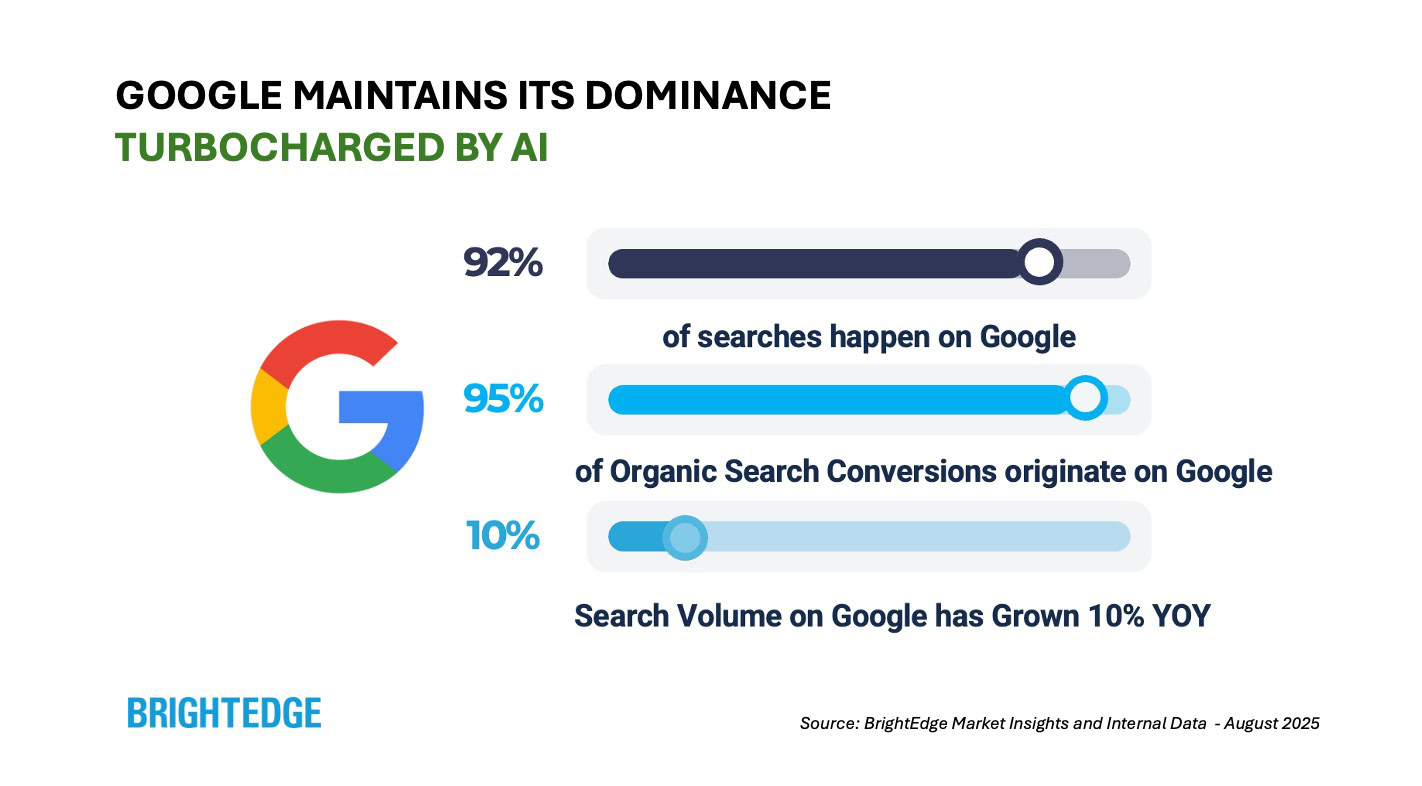 Image from author, September 2025
Where Traditional Search Still Excels
Traditional search still absolutely shines in certain areas. When you’re dealing with complex queries or personal searches, those traditional SERPs still provide something AI cannot: depth, discernment, and diverse perspectives. Ecommerce is a perfect example – when shopping, I still want to see those traditional listings to compare sources, read different reviews, and check various offers.
Traditional SERP’s And Google’s Integrated Approach
Google is handling this integration cleverly. They’re not replacing classic SERPs; they’re augmenting them. Google’s Gemini model powers AI Overviews that appear above traditional…
Source link
Disclaimer
We strive to uphold the highest ethical standards in all of our reporting and coverage. We blogs.grocliq.com want to be transparent with our readers about any potential conflicts of interest that may arise in our work. It’s possible that some of the investors we feature may have connections to other businesses, including competitors or companies we write about. However, we want to assure our readers that this will not have any impact on the integrity or impartiality of our reporting. We are committed to delivering accurate, unbiased news and information to our audience, and we will continue to uphold our ethics and principles in all of our work. Thank you for your trust and support.
Website Upgradation is going on for any glitch kindly connect at [email protected]