

“You knew, and you could have acted. Why didn’t you?”
This is the question you do not want to be asked. And increasingly, it’s the question leaders are forced to answer after an incident.
For years, many executive teams and boards have treated a large vulnerability backlog as an uncomfortable but tolerable fact of life: “we’ve accepted the risk.” If you’ve ever seen a report showing thousands (or tens of thousands) of open Highs and Critical CVEs, you’ve probably also heard the usual rationalizations from folks that would rather look the other way: we have other priorities, this will take years of engineering time to fix, how do you know these are really Critical, we’re still prioritizing, we’ll get to it.
In the old world, that story, while not good, was often survivable. Exploitation was slower, more manual, and required more operator skill. Even the most sophisticated attackers had constraints. Organizations leaned on those constraints as an unspoken part of the risk model: “If it was really as bad as you say, we’d be compromised right now.”
That world is gone.
AI has collapsed the cost of exploitation
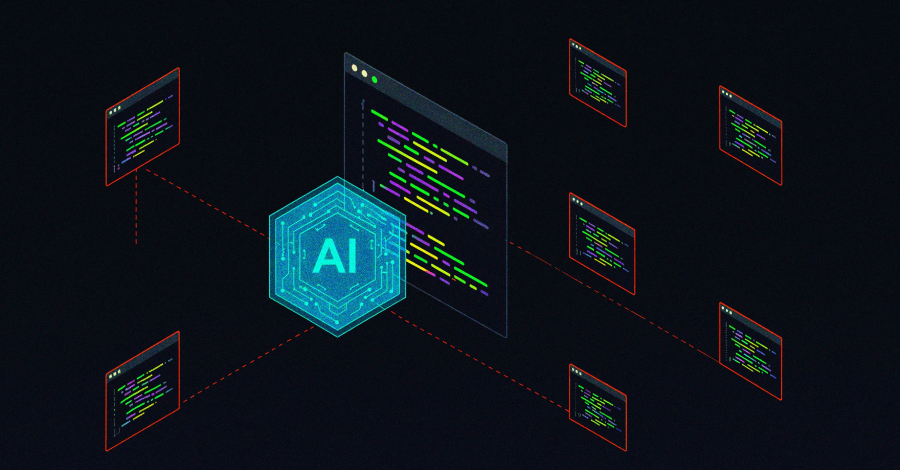
We’re now watching threat actors use agentic AI systems to accelerate the entire offensive workflow: reconnaissance, vulnerability discovery, exploit development, and operational tempo. Anthropic publicly detailed disrupting a cyber-espionage campaign in which attackers used Claude in ways that materially increased their speed and scale, and they explicitly warned that this kind of capability can allow less experienced groups to do work that previously required far more skill and staffing.
As security leaders, we know that AI enables attackers to move faster. But now, automation turns a backlog into a weapon. In the old model, having 13,000 Highs in production could be rationalized as a triage problem. In the new model, attackers can move from chain discovery to validation and exploitation in dramatically less time. “We’re working the backlog” stops sounding like a strategy and starts sounding like an excuse.
The most dangerous sentence in the boardroom
“Don’t worry, the CISO has it handled.”
I’ve lived the reality behind that sentence. CISOs can build programs, establish priorities, report metrics, and drive cross-functional remediation, but in many enterprises, the vulnerability problem is structurally bigger than any one executive’s responsibility. It’s a system problem: legacy dependencies, release velocity constraints, fragile production environments, and limited engineering resources. Boards can’t delegate governance.
Delaware’s Caremark line of cases is frequently cited in director oversight discussions: boards must have reporting systems designed to surface consequential risk and must actually engage with what those systems report. The point isn’t to scare directors with legal theory – it’s to make the practical governance point that if your reporting says “we have…
Source link
Disclaimer
We strive to uphold the highest ethical standards in all of our reporting and coverage. We blogs.grocliq.com want to be transparent with our readers about any potential conflicts of interest that may arise in our work. It’s possible that some of the investors we feature may have connections to other businesses, including competitors or companies we write about. However, we want to assure our readers that this will not have any impact on the integrity or impartiality of our reporting. We are committed to delivering accurate, unbiased news and information to our audience, and we will continue to uphold our ethics and principles in all of our work. Thank you for your trust and support.
Website Upgradation is going on for any glitch kindly connect at [email protected]