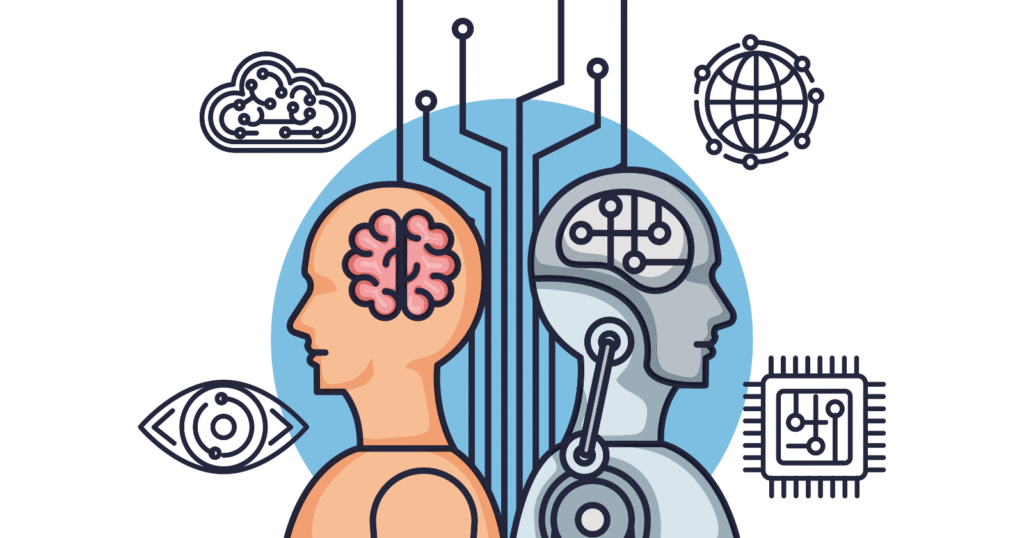

The pressure to deliver results with AI creates an operational bias, leading to AI outputs being treated as masterful, with minimal human oversight, simply because the prose reads as authoritative and the logic makes sense as a sequential step conclusion.
This bias is widening as adoption scales. Ungoverned use of generative AI is estimated to cost $10 billion in losses of enterprise value, according to Forrester’s 2026 B2B Predictions. Additionally, only 41% of marketers can prove return on investment from their AI investments in 2026, down from 49% the year before, according to Jasper’s State of AI in Marketing 2026.
With 73% of B2B organizations evaluating AI solutions in 2026, this scenario points to the critical importance of detecting failures in AI outputs. Beyond simple hallucinations, such as a fabricated source or date, I want to explore a more costly issue: the cognitive mirage, which happens when teams run AI processes or tasks on autopilot, without adequate checks and balances to confirm and correct output.
The cognitive mirage maps onto what Anthropic researchers describe in Tracing the Thoughts of a large language model (LLM). When an LLM model encounters a question it does not fully know how to answer, it can produce a confabulation, often a plausible-but-untrue response.
To tackle the cognitive mirage, in this article, I share a four-step protocol that B2B marketing teams can run before any AI output shapes a strategy, budget, or content decision.
Note: The guidance in this article applies broadly to all AI applications, including chatbots, agents, workflows, etc.
The Cognitive Mirage AI Test: 4 Steps To Challenge Any AI Output Before You Act
Speaking with our clients and partners, I have observed that the teams navigating AI most effectively share one operational habit: every AI output is a hypothesis.
The cognitive mirage AI test makes that posture formalized by fitting into every review cycle, while still streamlining AI output. Every hypothesis is scrutinized in four steps before it becomes a business decision.
1. Isolate The Conclusion
Begin by asking what the AI is asserting. Restate the model’s reasoning in your own words, then audit your own logic.
Examine whether the underlying process is flawed, and ask whether AI is agreeing with everything you said because the answer is correct or because the model is encouraged to agree.
Then ask it to re-assess its response based on the explanation you drafted. If it now produces a different claim, this means the original was flawed.
Cognitive mirage hides inside structures with convincing rationale, tiers, and prescriptive advice. Restating the conclusion in plain language exposes whether the team understands what is being claimed, and challenging your own input reveals when AI has been agreeing with a flawed brief.
Tactical note: Always ensure comprehension of the analysis conducted by AI. If a second output is different from the first, that is a signal of ambiguity or…
Source link
Disclaimer
We strive to uphold the highest ethical standards in all of our reporting and coverage. We blogs.grocliq.com want to be transparent with our readers about any potential conflicts of interest that may arise in our work. It’s possible that some of the investors we feature may have connections to other businesses, including competitors or companies we write about. However, we want to assure our readers that this will not have any impact on the integrity or impartiality of our reporting. We are committed to delivering accurate, unbiased news and information to our audience, and we will continue to uphold our ethics and principles in all of our work. Thank you for your trust and support.
Website Upgradation is going on for any glitch kindly connect at [email protected]