
The gap between who you are and who the machine thinks you are has always been an issue in search. After all, this gap is an alignment problem before it’s an AI problem, per se. AI has finally made it legible.
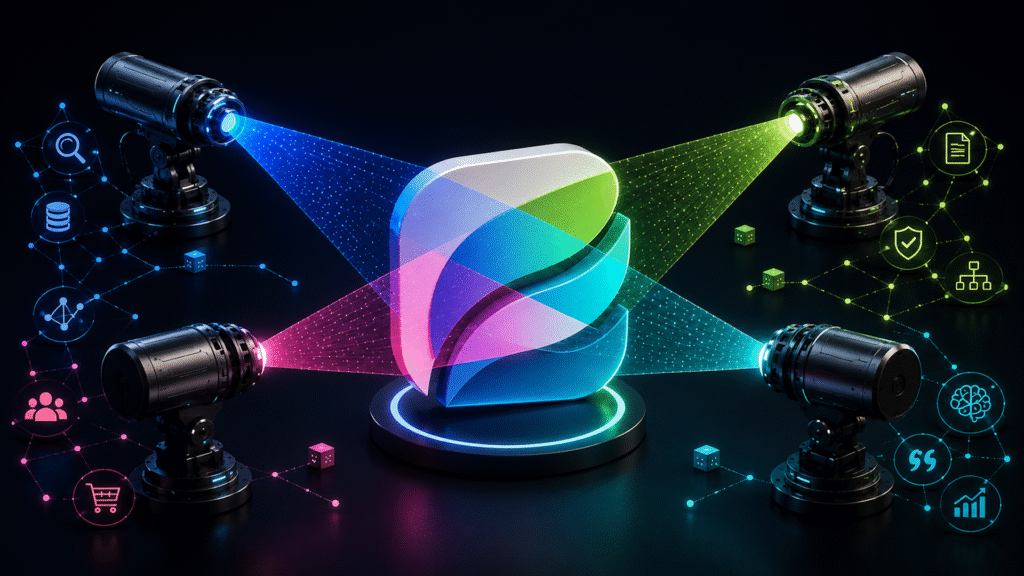
For example, I recently asked four AI engines to explain who a specific company was in plain language. Guess what? The results were as if I’d asked about four different companies. Same business, four identities, and none of them quite fit the bill based on what I knew to be true.
That gap is the whole problem, and it opens long before any AI is involved. SEO runs on a quiet assumption that four things line up:
- What your business says it is.
- What the search engine decides your business is.
- What AI engines cite your business for.
- Who your actual buyers are.
We steer by the ranking and trust the rest to follow. Yet they almost never line up, and the gap tends to sit open for years before anyone names it.
Where does this gap come from?
Every technical decision is a signal: the homepage copy, the internal links, the schema, and the brand saying one thing on LinkedIn and another in the sales deck. When these things disagree, they turn into noise that accumulates.
Those decisions get made in different rooms by different teams, including product, brand, content, and sales, which is one reason SEO can no longer work in a silo. The signals it has to reconcile were never SEO’s to set alone.
None of this began with the advent of AI. It reads the same signals Google always has. The only thing that’s changed is its output.
Traditional Google SERPs returned a position in a list you still had to translate, where contradictory signals could sit buried at the bottom of a page nobody scrolled to.
AI instead returns a plain-text paragraph in the first answer a buyer sees. When it detects noise, it either misinterprets your data or ignores it altogether.
That first impression carries more weight than ever because fewer links get shown and fewer get clicked. Take, for example, a randomized field experiment run in early 2026 by researchers at the ISB Institute of Data Science. They found that when an AI summary appears, outbound clicks to publishers fall by 38%. Users don’t feel they’re missing anything. (It’s a working paper, not yet peer-reviewed, so hold it loosely. Still, the older correlational Pew numbers point the same way.)
The Tow Center puts misattributed citations above six in 10, and the button that used to let users correct the engine has been removed. So whatever the AI engine has decided you are, right or wrong, tends to stand.
Be the brand AI recommends.
See where your brand appears in AI search, where competitors are winning, and what it takes to become the answer AI recommends.
See your AI visibility
The three symptoms of an identity gap

Source link
Disclaimer
We strive to uphold the highest ethical standards in all of our reporting and coverage. We blogs.grocliq.com want to be transparent with our readers about any potential conflicts of interest that may arise in our work. It’s possible that some of the investors we feature may have connections to other businesses, including competitors or companies we write about. However, we want to assure our readers that this will not have any impact on the integrity or impartiality of our reporting. We are committed to delivering accurate, unbiased news and information to our audience, and we will continue to uphold our ethics and principles in all of our work. Thank you for your trust and support.
Website Upgradation is going on for any glitch kindly connect at [email protected]