
Not a week goes by without me reading about ChatGPT ads in my LinkedIn feed. I’m guilty of it, too.
There’s so much happening so quickly. The product feed integrations, the Ads Manager beta, and the inevitable comparisons to Google’s dominance in search advertising.
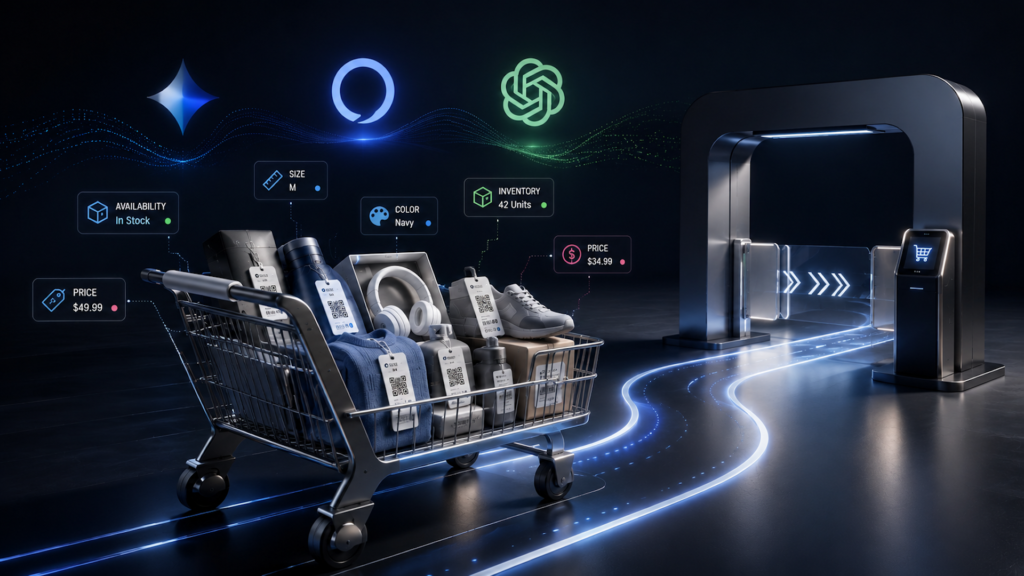
While it’s a compelling narrative for agencies looking to drive new business, it’s also short-sighted. The real shift isn’t advertising on LLMs like ChatGPT. It’s happening in checkout flows, voice assistants, and agentic commerce infrastructure, where the transaction itself becomes the ad unit.
The brands quietly winning this next cycle are refining their product data to ensure they factor into AI-powered purchase decisions.
ChatGPT Ads is structurally weak
Referral traffic from ChatGPT to the rest of the web grew 206% in 2025, according to Semrush’s analysis of 17 months of U.S. clickstream data. That’s the headline most people stopped at.
What they didn’t read was the footnote: that growth is driven by deeper engagement from existing users, not by audience expansion. ChatGPT’s U.S. user base has been essentially flat since September 2025. The people who use it are using it more. But the addressable audience isn’t growing.
This obviously matters if you’re trying to build an advertising business. Ad revenue scales with reach, and reach requires a growing audience. Without new users coming in, you’re running the standard sequence (build an audience and then monetize at scale) backward.
OpenAI’s leaked financials show another structural challenge: $13 billion in revenue against $34 billion in total costs and expenses in 2025, translating to an operating loss of nearly $21 billion.
On the bright side, OpenAI spent $2.37 to generate every $1 in revenue in 2024. By 2025, that ratio had improved to $1.60 per dollar. Progress, but not nearly enough, or fast enough. It’s no surprise OpenAI postponed its IPO until next year.
To put those numbers in perspective, Amazon lost $30 million the year it went public. Google and Meta were already profitable before their IPOs. OpenAI isn’t playing in the same league.
The scale of the bet is unlike anything the tech industry has attempted before. How long before investors pull back? Your guess is as good as mine.
See exactly how your competitors win.
Uncover the keywords, ads, landing pages, and strategies driving your competitors’ paid search success—and find your next opportunity to outperform them.
Analyze your competitors
OpenAI’s master plan is agentic
Here’s what the ChatGPT Ads narrative misses: Ads are a defensive move, not a strategic vision. Sam Altman has always been against them.
But OpenAI had to realize that to fund its dollar-hungry master plan, it needed something to help balance the books, at least partially.
So what’s that master…
Source link
Disclaimer
We strive to uphold the highest ethical standards in all of our reporting and coverage. We blogs.grocliq.com want to be transparent with our readers about any potential conflicts of interest that may arise in our work. It’s possible that some of the investors we feature may have connections to other businesses, including competitors or companies we write about. However, we want to assure our readers that this will not have any impact on the integrity or impartiality of our reporting. We are committed to delivering accurate, unbiased news and information to our audience, and we will continue to uphold our ethics and principles in all of our work. Thank you for your trust and support.
Website Upgradation is going on for any glitch kindly connect at [email protected]