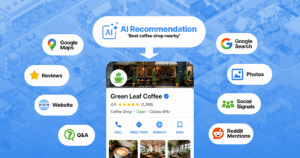
As you may already know, Google recently updated Search Console to let brands track how their social media and video posts perform in search results.
Most marketers view this update as a helpful gift. They believe Google wants to reward brands that build strong footprints across TikTok, YouTube, and X. And not wanting to be glass-half-full, I think this is the positive optics Google was hoping for.
If you look past the official announcements, a different picture comes into focus; this update is a clever trap. It serves as a shield to hide the traffic loss caused by artificial intelligence while positioning creators into further training Google’s AI models.
Redefining Success In The Era Of Click Loss
To understand this strategy, you must look at the crisis Google faces with web publishers.
Generative search experiences and AI summaries answer user questions directly on the search page. This setup keeps users on Google instead of sending them to external websites.
Organic traffic to a company website was the main measure of marketing success, and a narrative we as an industry pinned to the mast for years as to whether or not we were justifying our budgets.
By tracking social media views inside Search Console, Google is trying to change the definition of success. If your website traffic drops by a third, Google can point to your social media data. They can show you that your TikTok videos received thousands of impressions on the search page; they want you to believe you are still winning, even if you do not get actual clicks.
It forces marketers to view Google as the central control room for all visibility, even when Google stops sending visitors to their websites, as they’re still providing visibility.
Outsourcing The Search Graph To Creators
The update also serves as a tool to train Google’s artificial intelligence and to power generative search, Google needs to understand the real world.
The engine maps relationships between people, brands, and topics. This process is called entity resolution.
Google needs to know who is an expert, what they write about, and whether they are a real person or just an automated spam site.
By encouraging you to verify your social accounts inside Search Console, Google makes you do their work. You hand over the exact connections they need, tell them that your website, your X profile, and your TikTok account are all the same entity.
Instead of Google guessing which profile belongs to which author, publishers hand-deliver verified identity maps. Google can then use this clean data to train its language models on who the true authorities are.
This Search Console update also ties in nicely with the initial release of Google Search Profiles, which feels like a modern re-spin of the authorship benefits of Google+.
The Human Trust Filter
Having verified data is essential in the age of generative text.
Anyone can build a website, buy a drop domain, and programmatically generate thousands of articles with AI, and…
Source link
Disclaimer
We strive to uphold the highest ethical standards in all of our reporting and coverage. We blogs.grocliq.com want to be transparent with our readers about any potential conflicts of interest that may arise in our work. It’s possible that some of the investors we feature may have connections to other businesses, including competitors or companies we write about. However, we want to assure our readers that this will not have any impact on the integrity or impartiality of our reporting. We are committed to delivering accurate, unbiased news and information to our audience, and we will continue to uphold our ethics and principles in all of our work. Thank you for your trust and support.
Website Upgradation is going on for any glitch kindly connect at [email protected]