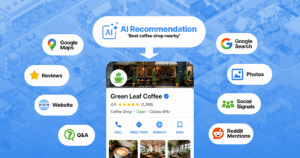

To see why MCP matters to marketers, start with what’s happened to the buyer journey. Over the past couple of years, I’ve watched it fold in on itself: a category decision that used to take someone 10 steps – Google the category, click a result, compare providers, check reviews, search again, then finally narrow down – now takes two. They ask an AI assistant, “What’s the best option for me?” and click whatever it recommends.
If your brand isn’t in the three- or four-name shortlist the model returns, you haven’t just lost the deal. To be honest, you were never in the running.
That shift puts a new question in front of every marketing team I talk to: How do you make sure AI describes your brand accurately, and get it doing real work for you instead of handing back generic advice? Increasingly, the answer runs through the Model Context Protocol, or MCP. So, the question becomes what to connect and how to make it work and how MCP for marketers benefits multiple teams – from SEO to the CMO.
What Is MCP & Why Should Marketers Care?
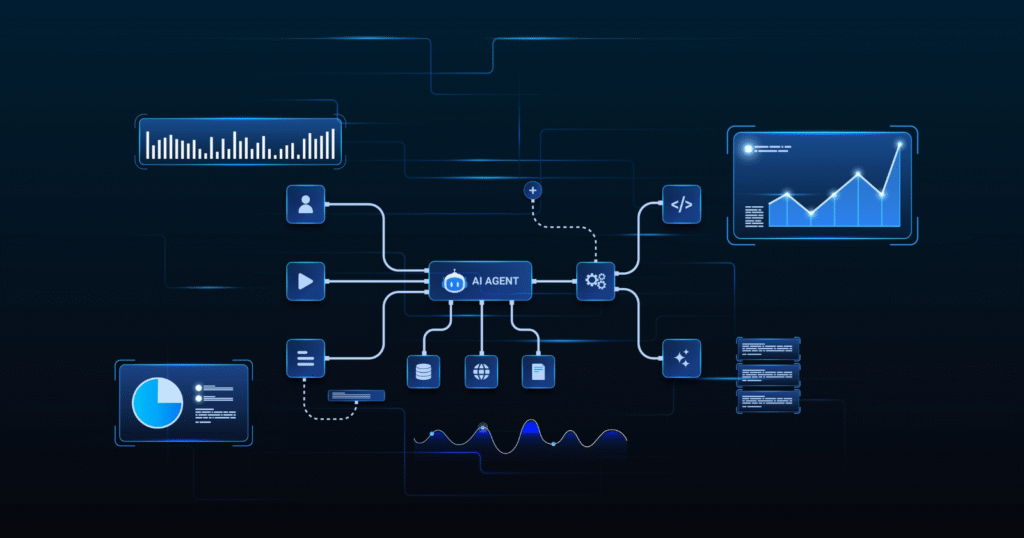
The Model Context Protocol is an open, standardized way to connect AI assistants (ChatGPT, Claude, Gemini, Copilot, and others) directly to your files, tools, databases, and platforms. The analogy people reach for, and I think it’s a fair one, is a USB-C port: one universal connector that lets any compatible AI agent plug into the systems you use, read their data, and act inside them.
How Does MCP Work?
It’s also important to be clear about what MCP is not, because the hype tends to blur it: It doesn’t make a model smarter, and it doesn’t conjure knowledge from thin air. It’s a bridge. On its own, a model reasons from its training data plus whatever you paste into the chat. With MCP, it can pull live information from your analytics platform, CMS, search data, or internal documents and act on it. Under the hood, it’s a simple, code-free handshake:
- The assistant connects to an MCP server.
- It calls that server to fetch data or run a task.
- It folds the result back into its answer.
How MCP For Marketers Works In Practice
In practice, it’s pretty simple:
- Connect once. Link the search and analytics platform your team relies on to your AI assistant through a single MCP connection: a one-time setup, no code.
- Prompt in plain language. Ask “Which categories are we losing AI visibility in?” and the assistant queries your live account in real time.
- Act on the answer. It returns a response built on your actual numbers, then takes the next step: drafting the brief, flagging blocked pages, ordering opportunities by demand and competitive gap.

You approve it once, then prompt as normal.
And that one connection works across ChatGPT, Claude, Copilot, and the rest. What comes back reflects where you actually stand, and it lands in the tools your team already uses. You can act on it the same day.
Connected AI Changes And MCP For Marketers
Why does this matter to…
Source link
Disclaimer
We strive to uphold the highest ethical standards in all of our reporting and coverage. We blogs.grocliq.com want to be transparent with our readers about any potential conflicts of interest that may arise in our work. It’s possible that some of the investors we feature may have connections to other businesses, including competitors or companies we write about. However, we want to assure our readers that this will not have any impact on the integrity or impartiality of our reporting. We are committed to delivering accurate, unbiased news and information to our audience, and we will continue to uphold our ethics and principles in all of our work. Thank you for your trust and support.
Website Upgradation is going on for any glitch kindly connect at [email protected]