
Your DAM is working.
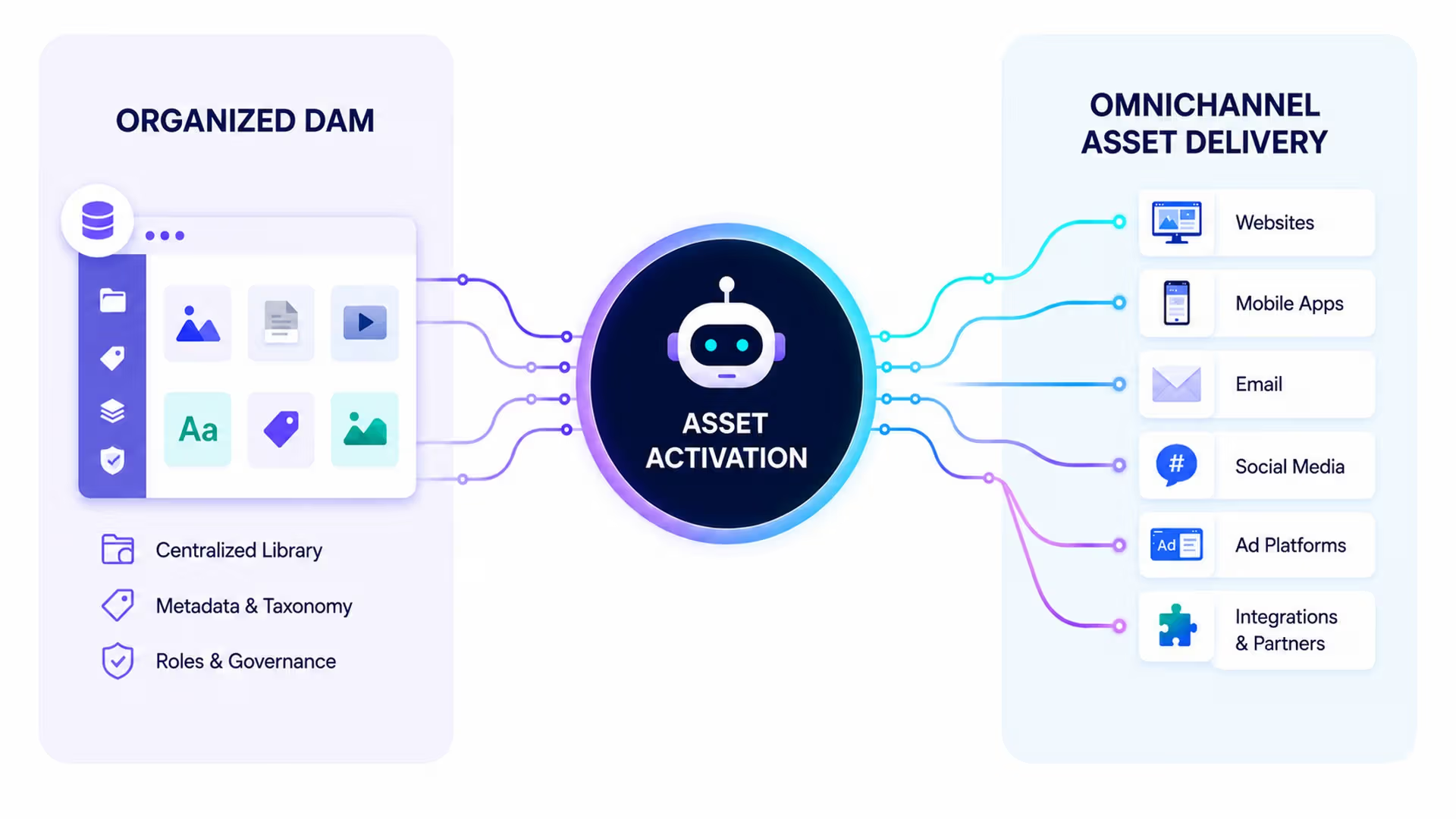
Assets are centralized. Metadata is applied. Roles and permissions are in place. By every standard measure of a digital asset management (DAM) implementation, you succeeded.
And yet, campaigns still launch late. Engineering is still fielding requests to resize hero images. The regional team in APAC is re-uploading files into the local CMS because they can’t easily pull from the DAM. The DAM isn’t broken; the assumption is that a functioning DAM means your content is ready to work.
A library and a supply chain are not the same thing
The original promise of DAM was organization: one place for assets, consistent metadata, and governance over which ones are approved and current. That’s a library problem, and modern DAMs solve it well. Assets are searchable, versions are controlled, and expired content doesn’t go live by accident.
But activation is a supply chain problem. An asset has to reach a campaign page, a product detail page, a social post, an email, and a partner’s CMS, in the right format, at the right quality, at the right moment. And the systems running that chain are increasingly AI agents and automations, not humans. Libraries were not built to run supply chains.
Adobe’s 2025 research surveyed more than 1,600 marketers and found that 62% say content demand has already increased 5x or more over the last two years. At the same time, G2’s 2026 DAM report found eight out of 10 DAM vendors now cite exponential asset growth as their primary operational pressure. More content, multiplied by more channels, equals more strain on the activation side. And yet, content activation workflows are stuck where they were five years ago.
The distance between an asset sitting in your DAM and that asset arriving in front of a customer — in the right state, at the right moment — is the Content Activation Gap. Closing it requires five specific shifts that most DAM implementations haven’t made:
From portal navigation to headless integration
Most DAMs were built with a portal in mind. A user logs in, navigates a folder structure, finds an asset, downloads it, and uploads it into the next system. Every interaction is manual, in both directions.
That model breaks at scale. Content moves in and out of systems faster than any portal can mediate. Headless API access lets any authorized system write to or read from the DAM directly. An ecommerce platform pulls product images from the DAM at the moment a webpage is rendered. A video production tool uploads rendered files to the DAM the moment a job completes.
Native integrations bring the DAM into the tools teams already use. A Figma plugin pushes designs straight into the campaign folder. A Slack integration shares assets and approval status directly in the channel where the team already talks.
A DAM disconnected from the stack becomes a workaround.
From stored exports to on-demand variants and versions
Every time…
Source link
Disclaimer
We strive to uphold the highest ethical standards in all of our reporting and coverage. We blogs.grocliq.com want to be transparent with our readers about any potential conflicts of interest that may arise in our work. It’s possible that some of the investors we feature may have connections to other businesses, including competitors or companies we write about. However, we want to assure our readers that this will not have any impact on the integrity or impartiality of our reporting. We are committed to delivering accurate, unbiased news and information to our audience, and we will continue to uphold our ethics and principles in all of our work. Thank you for your trust and support.
Website Upgradation is going on for any glitch kindly connect at [email protected]