
Five days compressed into five minutes. Six weeks into six days.
These aren’t marginal improvements. They’re what happens when marketing organizations remove the structural barriers that prevent talented people from acting at the speed of customer behavior.
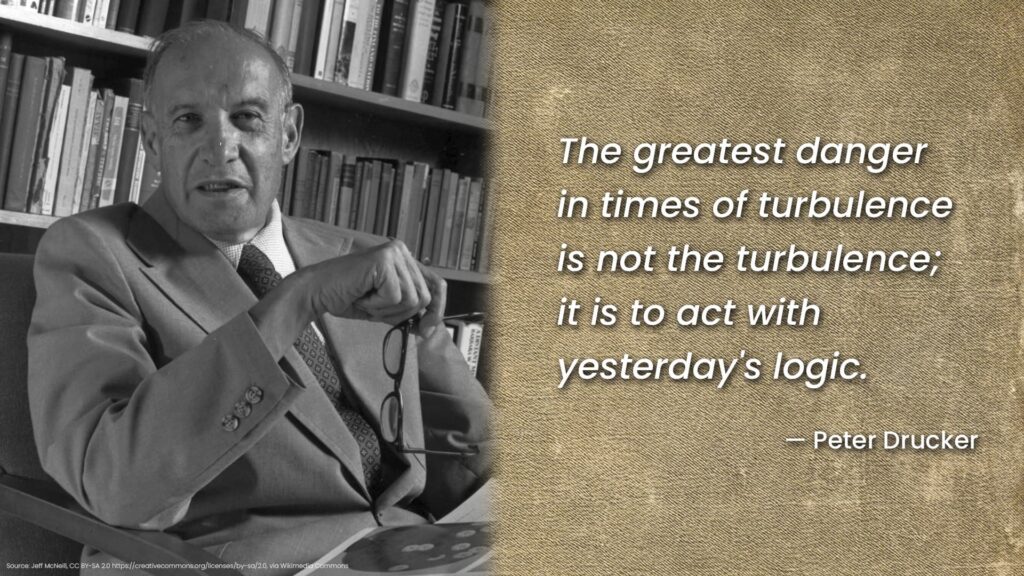
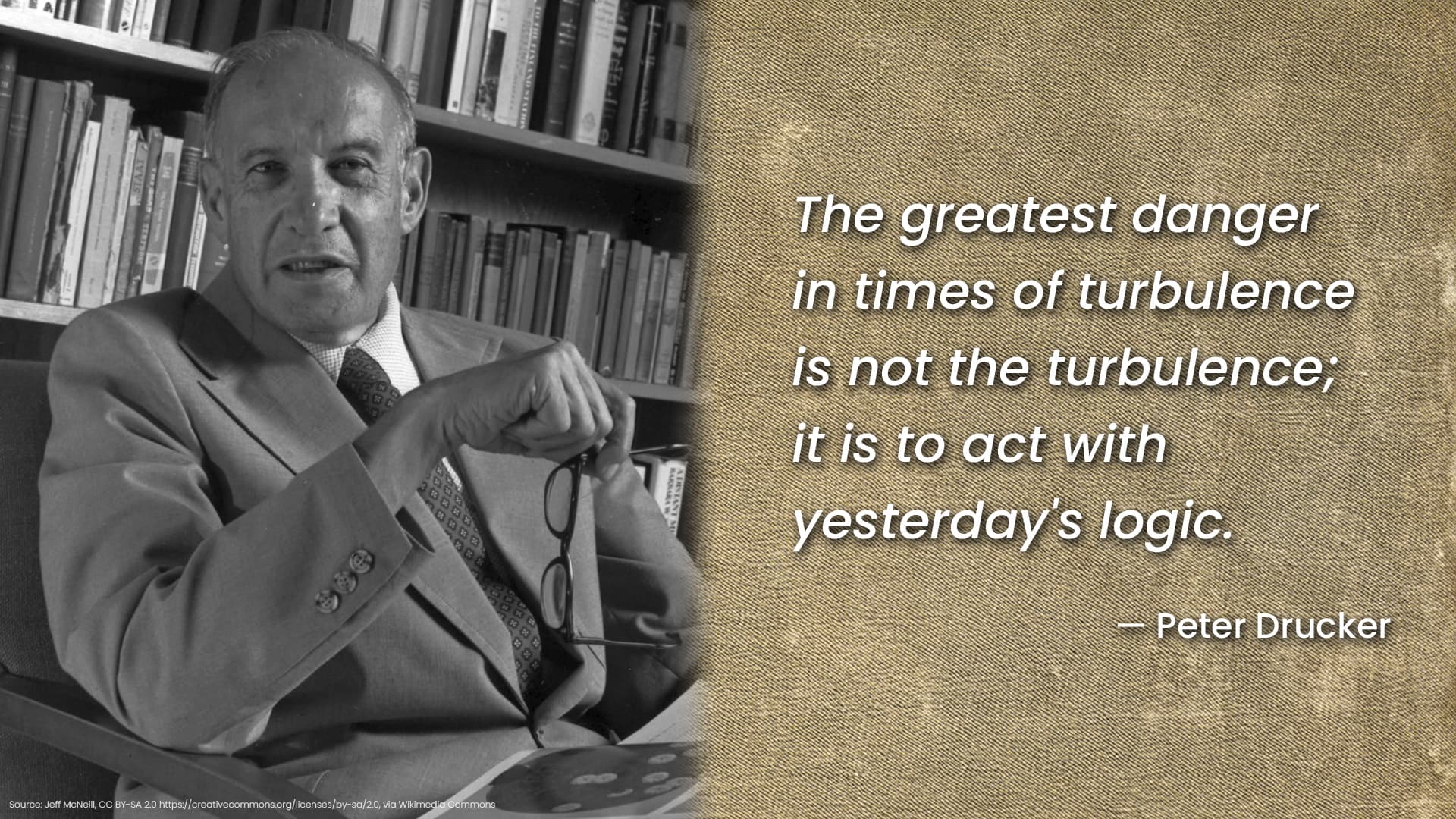
As Peter Drucker, the father of modern management, warned in “Managing in Turbulent Times,” “The greatest danger in times of turbulence is not the turbulence; it is to act with yesterday’s logic.”
Markets are volatile. Customer behavior shifts in real time. Channels are always on. Yet many marketing organizations still operate with structures designed for a slower world, and the cost is measured in missed moments.
Drucker identified the real constraint: Structure limits performance
One of Drucker’s most enduring ideas was that organizational structure matters more than individual capability. Smart people trapped in the wrong system will still underperform.
Consider a global gaming operator that required seven teams to launch a single campaign. Planning cycles stretched to six weeks. As their Global Head of Customer Marketing put it: “We needed seven teams and six weeks to send a single campaign.”
This wasn’t a talent problem. When insights live with analysts, creative execution lives with designers and activation depends on engineers; value is lost in the handoffs. Decisions slow. Context degrades. Moments pass.
Drucker warned against this fragmentation. He believed knowledge workers needed both clarity of purpose and freedom of action. Positionless Marketing removes the structural barriers that prevent that freedom.
From knowledge work to moment-based execution
At one of the largest iGaming companies in the U.S., campaign execution took five days. In an environment where players place bets, browse products or show signs of disengagement in real time, five days is an eternity. The opportunity to act appears and disappears almost instantly.
By consolidating customer data, orchestration and execution, eliminating the handoffs that killed momentum, they reduced campaign execution to five minutes. A 99% reduction in cycle time.
This reflects what Drucker always advocated: decisions made close to the action, by the people with the most context. Positionless Marketing enables marketers to move from insight to action without waiting on approvals or cross-functional workflows.
The impact goes beyond speed. They can now more easily direct a meaningful percentage of spend to their most deserving players. It means better decisions, executed immediately.
From management by objectives to execution by outcomes
Drucker introduced “management by objectives” to align organizations around outcomes rather than tasks. Over time, marketing drifted back toward task completion: build the campaign, launch the asset, measure later.
The global gaming operator’s transformation brought this philosophy full circle. After restructuring around…
Source link
Disclaimer
We strive to uphold the highest ethical standards in all of our reporting and coverage. We blogs.grocliq.com want to be transparent with our readers about any potential conflicts of interest that may arise in our work. It’s possible that some of the investors we feature may have connections to other businesses, including competitors or companies we write about. However, we want to assure our readers that this will not have any impact on the integrity or impartiality of our reporting. We are committed to delivering accurate, unbiased news and information to our audience, and we will continue to uphold our ethics and principles in all of our work. Thank you for your trust and support.
Website Upgradation is going on for any glitch kindly connect at [email protected]