
This post was sponsored by WP Engine. The opinions expressed in this article are the sponsor’s own.
In the race for audience attention, digital marketers at media companies often have one hand tied behind their backs. The mission is clear: drive sustainable revenue, increase engagement, and stay ahead of technological disruptions such as LLMs and AI agents.
Yet, for many media organizations, execution is throttled by a “Sticky-taped stack,” which is a fragile, patchwork legacy CMS structure and ad-hoc plugins. For a digital marketing leader, this isn’t just a technical headache; it’s a direct hit to the bottom line.
It’s time to examine the Fragmentation Tax, and why a new publishing standard is required to reclaim growth.
Fragmentation Tax: How A Siloed CMS, Disconnected Data & Tech Debt Are Costing You Growth
The Fragmentation Tax is the hidden cost of operational inefficiency. It drains budgets, burns out teams, and stunts the ability to scale. For digital marketing and growth leads, this tax is paid in three distinct “currencies”:
1. Siloed Data & Strategic Blindness.
When your ad server, subscriber database, and content tools exist as siloed work streams, you lose the ability to see the full picture of the reader’s journey.
Without integrated attribution, marketers are forced to make strategic pivots based on vanity metrics like generic pageviews rather than true business intelligence, such as conversion funnels or long-term reader retention.
2. The Editorial Velocity Gap.
In the era of breaking news, being second is often the same as being last. If an editorial team is forced into complex, manual workflows because of a fragmented tech stack, content reaches the market too late to capture peak search volume or social trends. This friction creates a culture of caution precisely when marketing needs a culture of velocity to capture organic traffic.
3. Tech Debt vs. Innovation.
Tech debt is the future cost of rework created by choosing “quick-and-dirty” solutions. This is a silent killer of marketing budgets. Every hour an engineering team spends fixing plugin conflicts or managing security fires caused by a cobbled-together infrastructure is an hour stolen from innovation.
The 4 Publishing Pillars That Improve SEO & Monetization
To stop paying this tax, media organizations are moving away from treating their workflows as a collection of disparate parts. Instead, they are adopting a unified system that eliminates the friction between engineering, editorial, and growth.
A modern publishing standard addresses these marketing hurdles through four key operational pillars:
Pillar 1: Automated Governance (Built-In SEO & Tracking Integrity)
Marketing integrity relies on consistency.
In a fragmented system, SEO metadata, tracking pixels, and brand standards are often managed manually, leading to human error.
A unified approach embeds governance directly into the workflow.
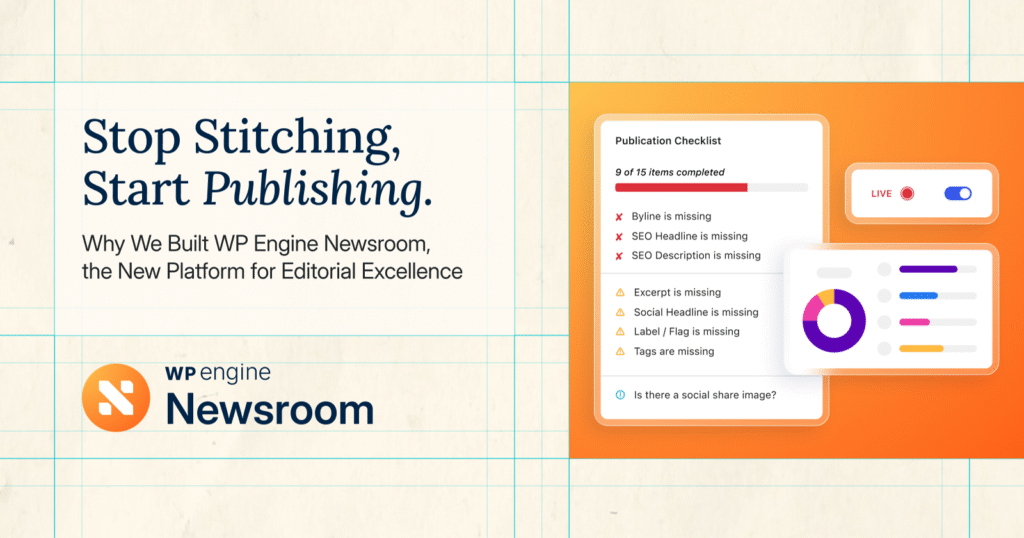
By using automated checklists,…
Source link
Disclaimer
We strive to uphold the highest ethical standards in all of our reporting and coverage. We blogs.grocliq.com want to be transparent with our readers about any potential conflicts of interest that may arise in our work. It’s possible that some of the investors we feature may have connections to other businesses, including competitors or companies we write about. However, we want to assure our readers that this will not have any impact on the integrity or impartiality of our reporting. We are committed to delivering accurate, unbiased news and information to our audience, and we will continue to uphold our ethics and principles in all of our work. Thank you for your trust and support.
Website Upgradation is going on for any glitch kindly connect at [email protected]