
Lea Pao, a professor of literature at Stanford University, has been experimenting with ways to get her students to learn offline. She has them memorize poems, perform at recitation events, look at art in the real world.
It’s an effort to reconnect them to the bodily experience of learning, she said, and to keep them from turning to artificial intelligence to do the work for them. “There’s no AI-proof anything,” Pao said. “Rather than policing it, I hope that their overall experiences in this class will show them that there’s a way out.”
It doesn’t always work. Recently, she asked students to visit a local museum, look at a painting for 10 minutes, and write a few paragraphs describing the experience. It was a purposefully personal assignment, yet one student responded with a sophisticated but drab reflection – “too perfect, without saying anything”, Pao said. She later learned the student had tried to visit the museum on a Monday, when it was closed, and then turned to AI.
As artificial intelligence has upended the way in which students read, learn and write, professors like Pao have been left to their own devices to figure out how to teach in a transformed landscape.
Many faculty members in the hard sciences and social sciences have pointed to the “productivity boost” AI can offer, and the research potential unlocked by its ability to process and analyze vast amounts of data. AI’s most enthusiastic proponents have boasted the technology may help cure cancer and “accelerate” climate action.
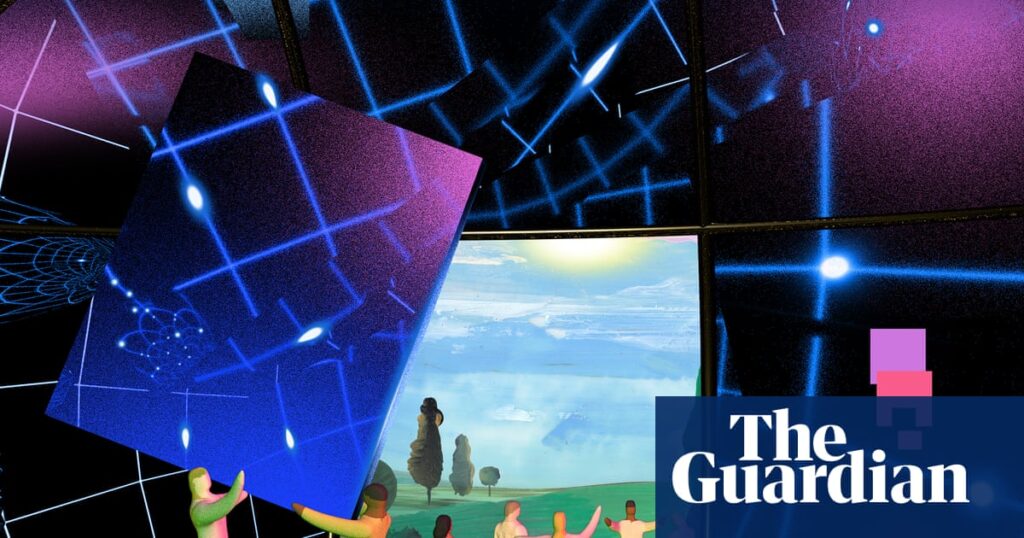
But in fields most explicitly associated with the production of critical thought – what is collectively referred to as the “humanities” – most scholars see AI as a unique threat, one that extends far beyond cheating on homework and casts doubt on the future of higher education itself in a fast-approaching, machine-dominated future.
American degrees often cost up to hundreds of thousands of dollars and result in decades of debt and recent years have seen a freefall in public confidence in US higher education. With the potential for AI to increasingly substitute independent thought, a pressing question becomes even more urgent: what exactly is a university education for?
The Guardian spoke with more than a dozen professors – almost all of them in the humanities or adjacent fields – about how they are adapting at a time of dizzying technological advancement with few standards and little guidance.
By and large, they expressed the view that reliance on artificial intelligence is fundamentally antithetical to the development of human intelligence they are tasked with guiding. They described desperately trying to prevent students from turning to AI as a replacement for thought, at a time when the technology is threatening to upend not only their education, but everything from the stock market to social relations to war.
Most…
Source link
Disclaimer
We strive to uphold the highest ethical standards in all of our reporting and coverage. We blogs.grocliq.com want to be transparent with our readers about any potential conflicts of interest that may arise in our work. It’s possible that some of the investors we feature may have connections to other businesses, including competitors or companies we write about. However, we want to assure our readers that this will not have any impact on the integrity or impartiality of our reporting. We are committed to delivering accurate, unbiased news and information to our audience, and we will continue to uphold our ethics and principles in all of our work. Thank you for your trust and support.
Website Upgradation is going on for any glitch kindly connect at [email protected]