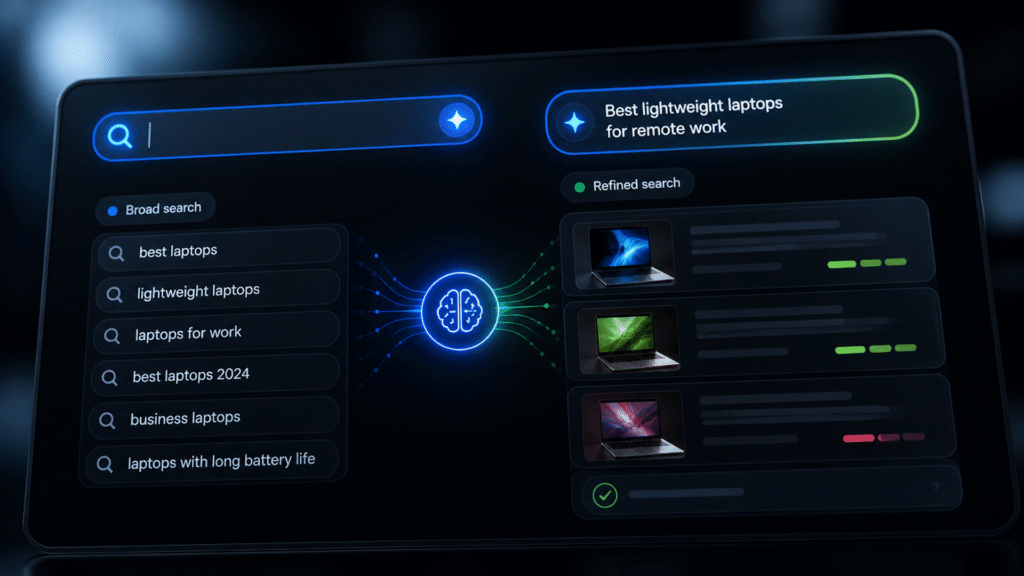

One of the major reasons PPC practitioners hold onto syntax-oriented keyword strategies is the disconnect between “query intent” and “conversion intent.” For years, you’ve likely relied on keywords to show you understand what your customers want and to prequalify traffic using syntax-oriented signals.
As user behavior shifts to more conversational queries and AI becomes an increasingly relevant part of the user journey, the distinction between these two intents becomes even more critical to understand and act on.
Here, we’ll define query and conversion intent and explore strategies to apply them effectively. This isn’t prescriptive. You should make decisions based on what will serve your business well. However, it provides a framework for analyzing your data and optimizing for the right humans.
Disclosure: I’m a Microsoft employee, and I’ll be sharing some examples that pull from Microsoft tooling. However, most of the strategies reflect platform-agnostic approaches.
What are query and conversion intents?
Query intent is the underlying need driving the text put into a search function. This search function can be on a SERP (search engine results page), video/social/gaming/email/site search bar, or AI surface.
Conversion intent is the human need to achieve some outcome, understood through stated and inferred data points. These range from text entered in various search experiences, content consumed, and tracked actions taken.
Different examples of query and conversion intent will have higher or lower rates of confidence based on how explicit text is, as well as patterns in content consumed.
For example, if I search “Microsoft ads login,” both query and conversion intent are clear — I want to log in. It’s easy to match ads and organic content to that query. Videos shown in any video query would have to do with logging in, and emails would be focused around login information.
Google SERP

Bing’s SERP

YouTube results

The query “Microsoft ads” is more nebulous, as such, needs to draw from other signals like previously engaged content and search history. While I might get a login page, I’d likely also see blog/sales content, third-party advice on Microsoft ads, and potentially competitor info trying to capitalize on the general nature of the query.
Google SERP

Bing SERP

YouTube results

Let’s look at a non-branded example as well. “Purple hair dye” has a clear transactional intent. While the user might not have a brand in mind, they know they want a specific color.
We don’t know if the user is looking for a semi-permanent or permanent color. We also don’t know the user’s pronouns, so matching them to a specific demographic to entice a purchase is a gamble.
Google SERP

Bing SERP

YouTube results

In the query “purple hair dye for long wavy hair,” the transactional intent is maintained. However, the query…
Source link
Disclaimer
We strive to uphold the highest ethical standards in all of our reporting and coverage. We blogs.grocliq.com want to be transparent with our readers about any potential conflicts of interest that may arise in our work. It’s possible that some of the investors we feature may have connections to other businesses, including competitors or companies we write about. However, we want to assure our readers that this will not have any impact on the integrity or impartiality of our reporting. We are committed to delivering accurate, unbiased news and information to our audience, and we will continue to uphold our ethics and principles in all of our work. Thank you for your trust and support.
Website Upgradation is going on for any glitch kindly connect at [email protected]