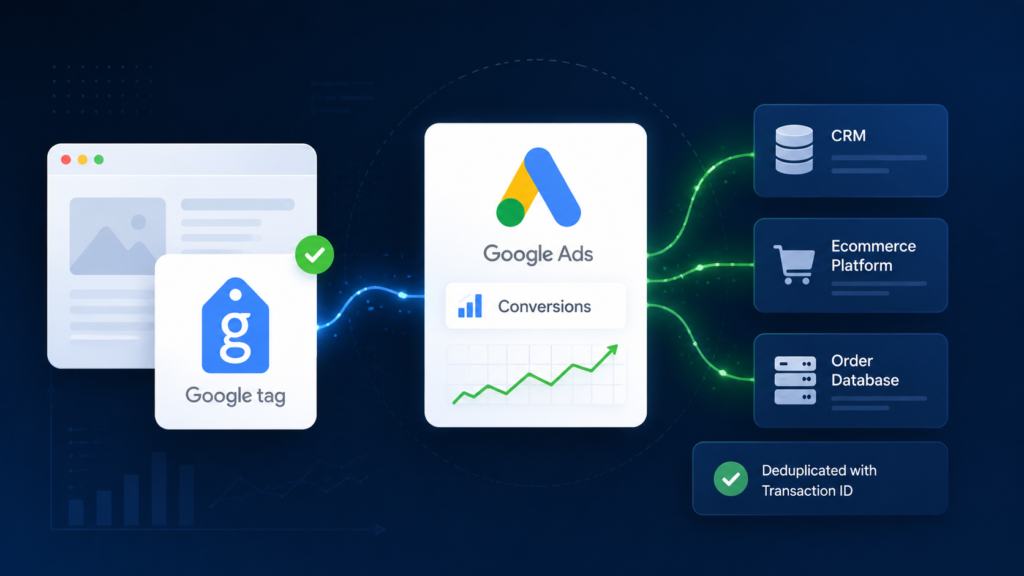

Google Ads is rolling out a beta that allows advertisers to connect additional data sources directly to website conversion actions, giving marketers a new way to supplement tag-based measurement with backend conversion data.
The feature enables advertisers to combine conversion signals collected through Google tags with transaction data from systems such as CRMs, order databases and ecommerce platforms.
What’s new. Advertisers can now attach an additional data source to an existing website conversion action through Google Ads Data Manager or the Data Manager API.
The beta is designed to supplement — not replace — website tagging by allowing advertisers to send conversion data from backend systems into the same conversion action used for campaign measurement and optimization.
Why we care. The new beta helps fill conversion measurement gaps by combining Google tag data with first-party data from backend systems like CRMs and order databases. This can recover conversions that may be missed due to browser restrictions, privacy settings, or ad blockers, giving advertisers a more complete view of campaign performance.
Why Google launched it. According to Google, combining tag-based measurement with backend conversion data can help advertisers create a more complete picture of conversions and improve campaign performance.
The company says the feature can help:
- Recover conversions that may not be captured by website tags.
- Improve measurement resilience.
- Provide more comprehensive data for automated bidding.
- Simplify data integration through Data Manager.
How it works. The system combines website conversion data collected through Google tags with conversion records uploaded from an advertiser’s backend systems.
To prevent duplicate reporting, Google uses transaction IDs to identify and deduplicate conversions between the tag and the additional data source within the same conversion action.
What advertisers need to know. The beta is currently limited to website conversion actions that use Google tag or Google Tag Manager implementations.
It is not available for:
- Google Analytics imported conversions.
- URL-based conversion actions.
Google recommends adding an additional data source to an existing conversion action rather than creating a new one to avoid potential double-counting across campaign goals.
Data requirements. Every upload must include:
- Transaction ID.
- Conversion date and time.
Advertisers must also provide at least one attribution identifier, such as hashed customer information or a Google click identifier.
Google recommends uploading conversion data as quickly as possible and ensuring uploaded conversion values match the same currency format used by website tags.
Bottom line. The beta marks Google’s latest effort to strengthen conversion measurement by bringing backend transaction data directly into Google Ads. As advertisers look for more complete…
Source link
Disclaimer
We strive to uphold the highest ethical standards in all of our reporting and coverage. We blogs.grocliq.com want to be transparent with our readers about any potential conflicts of interest that may arise in our work. It’s possible that some of the investors we feature may have connections to other businesses, including competitors or companies we write about. However, we want to assure our readers that this will not have any impact on the integrity or impartiality of our reporting. We are committed to delivering accurate, unbiased news and information to our audience, and we will continue to uphold our ethics and principles in all of our work. Thank you for your trust and support.
Website Upgradation is going on for any glitch kindly connect at [email protected]