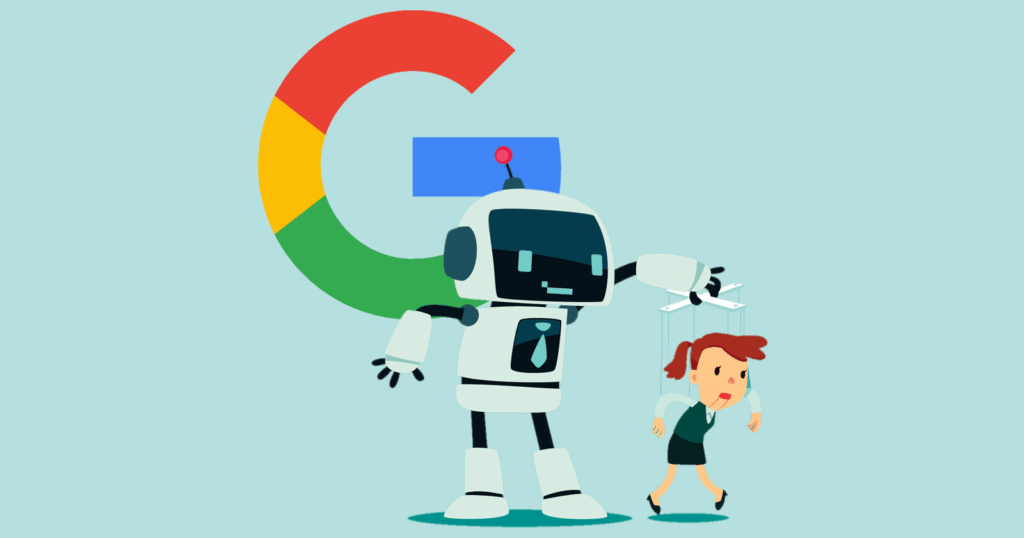

Google has moved “computer use” from a specialized model into Google Gemini 3.5 Flash, making agent-style control of browsers, apps, and desktop workflows a built-in capability instead of a separate product. That means Gemini can now see and interact with user interfaces, reason about what’s on a computer screen, and take direct actions. A Google DeepMind senior scientist recently warned that scaled AI agents create incentives “for malicious people to do malicious things.”
Developers can now build agents that do a lot more than call APIs. They can automate GUI-only workflows such as testing software, filling forms, navigating dashboards, or using legacy apps with no API access. This reduces bottlenecks for automation and expands what AI agents can realistically do in production.
If software has a graphical user interface (GUI) but no API, an AI agent can still use it. Agents can be told to log into a dashboard, export yesterday’s SEO reports to a spreadsheet, compare them with last week’s data, and email the user a summary. The workflow is handled with natural language instead of relying on custom scripts to connect the dashboard, spreadsheet, and email.
What It Means For SEO
SEO tools may become far more agentic in the near future. Instead of just surfacing data, AI could log into Google Search Console, audit sites, crawl a site with Screaming Frog, extract specific data points for comparison, and execute repetitive optimization workflows.
For site owners, it also carries the implication that another set of AI agents may act as “visitors,” which could affect how site owners interpret site interactions and engagement signals for site and sales optimization.
AI Agents Will Be Attacked
Google’s announcement is pretty upbeat but the “safety best practices” document it links to bears paying attention to because failure to get this part right may result in theft and other poor user experiences.
The document explains:
“Computer Use presents unique security and operational risks, as a model acting on a user’s behalf might encounter untrusted content on screens or make errors in executing actions.”
That “untrusted content on screens” may be reference to the “traps” set for AI agents that the senior scientist at Google DeepMind warned against.
Google recommends seven best practices when this new AI agent:
1. Human-in-the-Loop (HITL):
Enforce user confirmation: When the safety response indicates require_confirmation (or legacy safety decision requires it), prompt the user for approval.
Provide custom safety instructions: Implement a custom system instruction to define and enforce your own safety boundaries.2. Secure execution environment:
Run your agent in a secure, sandboxed environment to limit its potential impact. This can be a sandboxed virtual machine (VM), a container (e.g., Docker), or a dedicated browser profile with limited permissions3. Input sanitization:
Sanitize all user-generated text in prompts to…
Source link
Disclaimer
We strive to uphold the highest ethical standards in all of our reporting and coverage. We blogs.grocliq.com want to be transparent with our readers about any potential conflicts of interest that may arise in our work. It’s possible that some of the investors we feature may have connections to other businesses, including competitors or companies we write about. However, we want to assure our readers that this will not have any impact on the integrity or impartiality of our reporting. We are committed to delivering accurate, unbiased news and information to our audience, and we will continue to uphold our ethics and principles in all of our work. Thank you for your trust and support.
Website Upgradation is going on for any glitch kindly connect at [email protected]