
You can publish consistently, follow SEO best practices, and still watch competitors outrank you. More often than not, the problem isn’t content quality. It’s content coverage. Your competitors are answering questions your audience is asking, and you’re not in the conversation yet.
That’s where a content gap analysis comes in. It helps you identify topics your competitors rank for that you don’t, then decide which opportunities are actually worth pursuing.
Finding the gaps isn’t the hard part. SEO tools make that easy. The challenge is making sense of thousands of keywords spread across multiple reports and deciding what deserves your attention first.
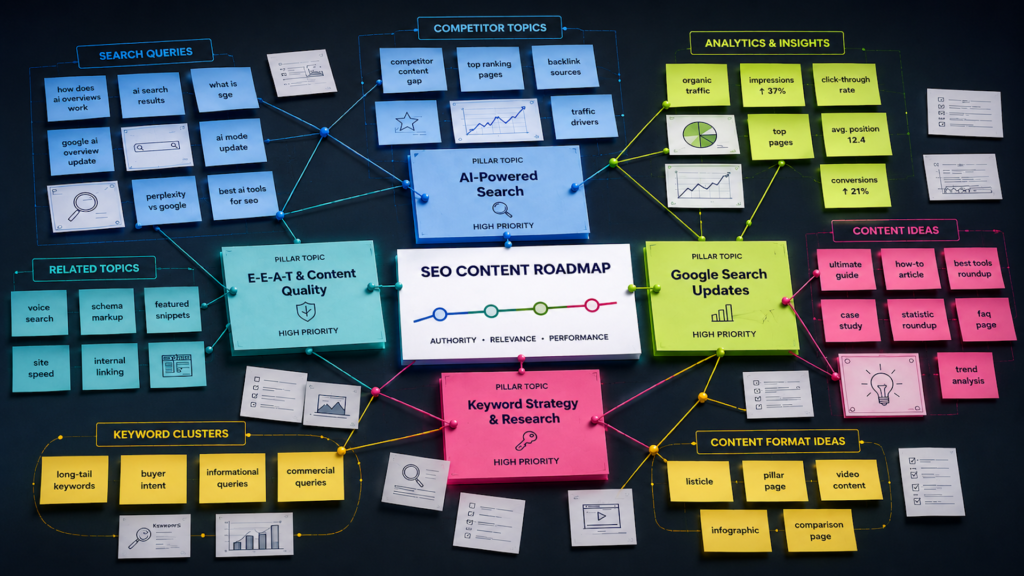
This workflow shows how to combine competitor data, first-party search data, and AI to prioritize content opportunities and build a roadmap based on business impact, not just search volume.
Bring your SEO data together before you analyze it
In this workflow, I use Semrush to identify competitive opportunities, Google Search Console to validate where my site is already showing signs of authority, and Google Analytics to add business context. Claude then brings those datasets together, grouping related opportunities, identifying patterns, and helping prioritize what belongs on the content roadmap.
There are two ways to follow this process:
- You can export reports directly from the platforms and upload them to Claude.
- Or, if you’ve connected those platforms through MCP (Model Context Protocol, a standard that allows AI models to connect securely to your data sources), Claude can pull the data directly without manual exports. The workflow changes, but the analysis doesn’t.
Below, I’ll walk through the process I use to turn a pile of SEO data into a prioritized content plan.
Step 1: Choose the right competitors
A content gap analysis is only as good as the competitors you compare yourself against. That sounds obvious, but it’s one of the easiest mistakes to make.
If you compare your site to Amazon, Reddit, or Wikipedia, you’ll end up with thousands of keyword “opportunities” that were never realistic to begin with. The goal isn’t to find every site ranking for your target keywords. It’s to find businesses competing for the same audience.
I typically start with Semrush’s Organic Competitors report. Rather than relying on a list of known competitors, this report identifies domains competing for many of the same keywords. From there, I narrow the list to three to five sites that closely match your business and target audience.
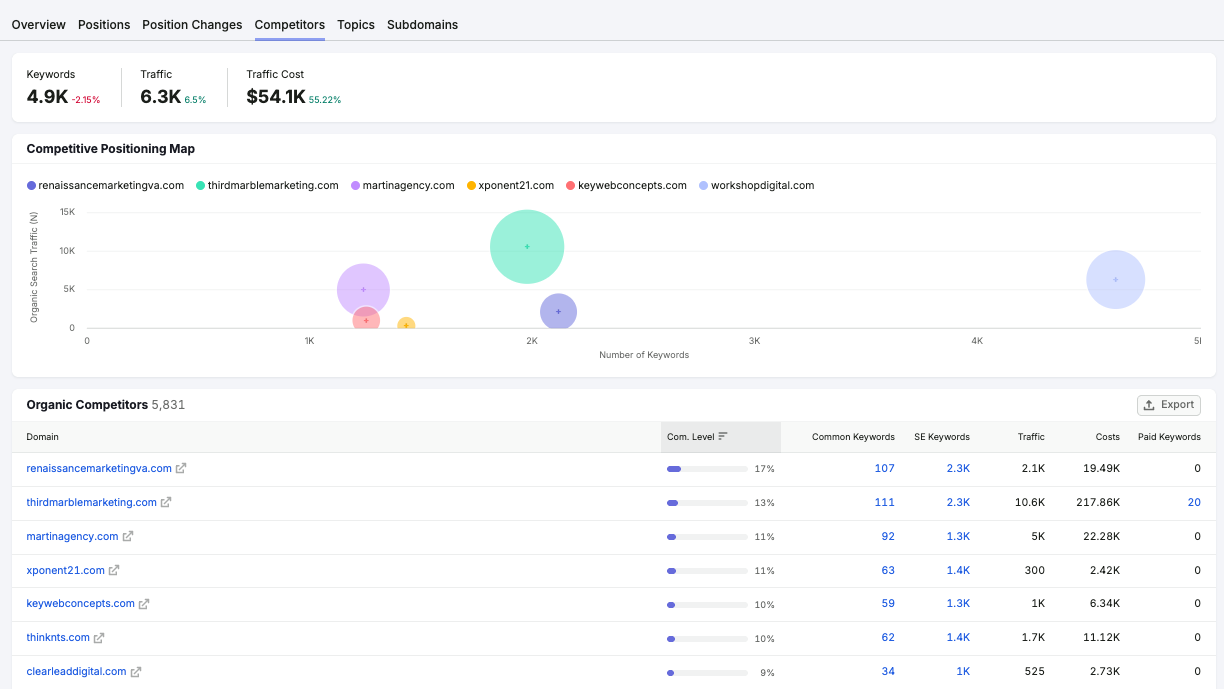
Don’t be surprised if a few familiar names don’t make the cut. Business competitors and organic search competitors aren’t always the same.
You should also filter out sites that will skew the analysis, including:
- Large marketplaces like Amazon
- Community-driven sites like Reddit or Quora
- Reference sites like Wikipedia
- Local directories or review sites
- Publishers that don’t…
Source link
Disclaimer
We strive to uphold the highest ethical standards in all of our reporting and coverage. We blogs.grocliq.com want to be transparent with our readers about any potential conflicts of interest that may arise in our work. It’s possible that some of the investors we feature may have connections to other businesses, including competitors or companies we write about. However, we want to assure our readers that this will not have any impact on the integrity or impartiality of our reporting. We are committed to delivering accurate, unbiased news and information to our audience, and we will continue to uphold our ethics and principles in all of our work. Thank you for your trust and support.
Website Upgradation is going on for any glitch kindly connect at [email protected]