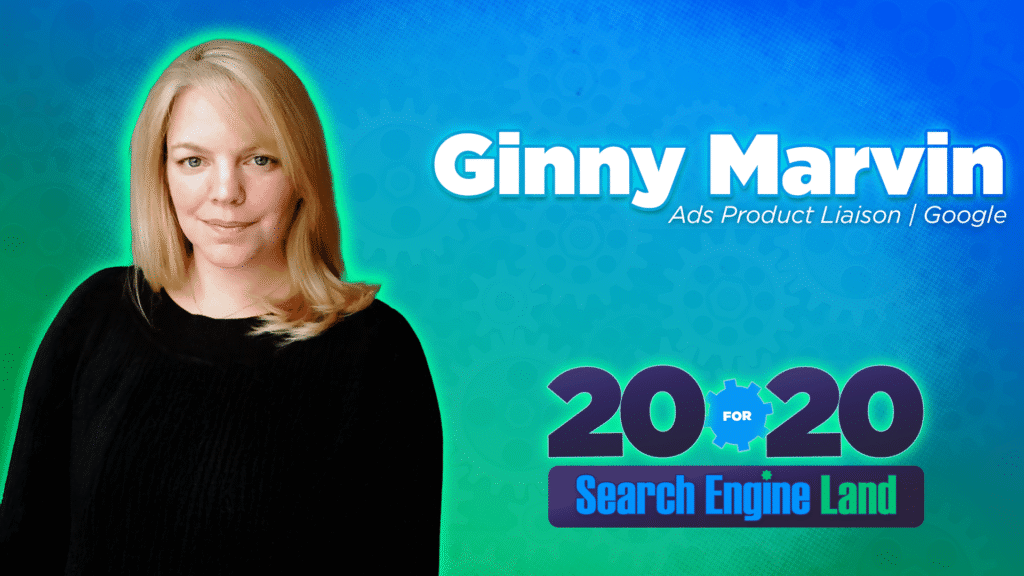

Ginny Marvin didn’t get into PPC because she had a grand plan.
She got into it because she was ready to start again.
After years working in print publishing and ad sales marketing, Marvin found herself at a career pivot point. A startup magazine she had helped launch folded, and she decided it was time to move fully into digital.
That meant going from marketing director to entry-level applicant.
“I don’t know what I’m doing, so I’ll start from the beginning,” she recalled.
That reset eventually led her into search marketing, Search Engine Land, and later Google, where she is now Google Ads Liaison.
In this interview, Marvin looks back at how paid search has changed, what marketers still misunderstand, and why the next phase of search will reward curiosity more than control.
PPC clicked faster than SEO
Marvin started on the SEO side at a small agency.
Then the paid search manager went on holiday.
She took over the campaigns temporarily — and immediately saw the appeal.
Coming from print, where measurement was slow or sometimes impossible, PPC felt almost instant. You could launch, spend, measure and see action quickly.
That speed changed everything.
For Marvin, PPC made the connection between marketing activity and business results much clearer than SEO did at the time.
Google won by moving faster
When Marvin entered the industry, Google wasn’t the only serious search player.
Yahoo was still a major force, and Microsoft was part of the mix. But over time, Google pulled ahead.
Marvin believes the difference was focus.
Google kept improving the product, launching new features and iterating faster than competitors. It became increasingly clear that Google was building around advertiser needs and pushing the industry forward.
Early PPC was painfully manual
Today’s PPC marketers may complain about manual work, but the early days were on another level.
Campaigns were built around huge keyword lists, endless permutations and highly granular structures. Advertisers spent hours creating keyword combinations and negative keyword lists.
It gave marketers a sense of control, but it also forced them to build campaigns around how the platform worked — not necessarily how the business worked.
That, Marvin said, is one of the biggest changes in paid search: campaigns now start more naturally with goals.
Search Engine Land became the industry’s newsroom
When Search Engine Land launched, Marvin was still early in her search career.
But it quickly became the place people went for search news, updates and expert analysis.
What made it valuable wasn’t just the reporting. It was the mix of fast news, contributed columns and practical insight from people doing the work.
For Marvin, Search Engine Land played a major role in professional growth across the industry because it made knowledge…
Source link
Disclaimer
We strive to uphold the highest ethical standards in all of our reporting and coverage. We blogs.grocliq.com want to be transparent with our readers about any potential conflicts of interest that may arise in our work. It’s possible that some of the investors we feature may have connections to other businesses, including competitors or companies we write about. However, we want to assure our readers that this will not have any impact on the integrity or impartiality of our reporting. We are committed to delivering accurate, unbiased news and information to our audience, and we will continue to uphold our ethics and principles in all of our work. Thank you for your trust and support.
Website Upgradation is going on for any glitch kindly connect at [email protected]